
BC Ferries Million Dollar No-Fault Executive Payouts Reward Failure
BC Ferries Million Dollar No-Fault Executive Payouts Reward Failure
Despite the Comptroller General characterizing BC Ferries as a “culture of secrecy and enrichment” in 2009, executives continue receiving secret “no-fault” million-dollar exit payouts that violate the Coastal Ferry Act. These taxpayer “safe harbour” exit payments help to explain why successive CEOs perpetuate the same failures dating to the Fast Ferries scandal in 1999—with impunity. At the same time, Premier David Eby is cutting $1.4 billion from affordable housing, stalling hospital and health care projects, freezing funding for promised affordable child care, and eliminating 15,000 public sector jobs, claiming these cuts are inevitable given the province’s record-breaking debt. Continuing to increase funding for BC Ferries’ broken business model and declining service, however, is not fiscally inevitable.
In response to BC Ferries’ record-breaking debt and projected fare increases in excess of 30%, CEO Nicolas Jimenez proposes receiving substantially increased funding from all levels of government—not to “clean up” his predecessor’s failures, but to maintain an untenable status quo that violates the Coastal Ferry Act’s over-arching mandate to provide “safe and reliable service in a cost-effective manner.” The following “no fault” severance packages both shield and reward successive CEOs for repeating documented failures that could be averted with transparency and enforceable governance:
Mark Collins (CEO 2017–2022): Fired in July 2022 for 173 sailing cancellations in 28 days, approving an 18.3% executive raise while suppressing union wages, and deploying defective “green fleet” vessels. His “no-fault” payout was $1.3 million including 24-month salary continuation of $534,589, benefits, and $88,269 accrued vacation—kept secret.
Corrine Storey (Chief Operating Officer 2017–2024): Asked to quietly take early retirement for overlooking Coastal Class motor failures costing taxpayers hundreds of millions. Her “no-fault” payout was $1.1 million including 24-month salary continuation of $528,127, benefits, and undisclosed vacation time—kept secret.
Nicolas Jimenez (CEO 2023–present): Hired ostensibly to clean up his predecessor’s failures, if fired today after three years, Jimenez’s exit package would be $1.4 million including 24-month salary continuation of $530,441, benefits, and accrued vacation, plus a 120-month “bridge” pension that could total $600,000 additional if his ICBC pension exceeded his BC Ferries pension by $5,000 monthly—kept secret.
While “without cause” termination clauses are standard for Crown executives, they are legally paired with an 18-month salary continuance cap and Treasury Board approval. Severances in the private sector strongly scrutinize rare “no-fault” clauses and also limit salary continuance to 18 months. By exceeding public and private sector severances, BC Ferries executive exit payouts violate the Coastal Ferry Act; and because the corporation is neither Crown nor private, executive payouts bypass provincial guardrails. This explains why Jimenez, for example, is free to exceed his predecessor’s failures by:
- Escalating conflict with the BC Ferry and Marine Workers Union: Union President Eric McNeely states that arbitration under Jimenez’s leadership is the most “difficult” since the corporation was privatized, that the arbitrated 1.65% wage award is devoid of logical justification, and that BC Ferries is waging “psychological warfare” on workers by even removing kettles and coffee pots from vessels — while executives received 28.95% salary increases since 2022.
- Systematically denying FOI requests for defective new procurements claiming “business secrecy” — including the decision paper demanded by the federal Transportation Standing Committee on BC Ferries’ contract for Chinese-built vessels, arguing the committee was acting outside its constitutional authority.
- Gaslighting the public with a 99.9% service metric that counts breakdowns as delays rather than cancellations — the more honest 83.3% delay metric tells a different story.
- Withholding the 2023 Shirocca report from the federal committee — which faulted BC Ferries for accepting low rather than accurate foreign bids, deferring repair expenses, ignoring expert advice, and lacking transparency when vessels fail.
- Claiming the lowest procurement price is prudent and in alignment with the Coastal Ferry Act: accepting the lowest bid for Chinese-built vessels despite the Act mandating “cost-effective” — not cheapest — service, and ordering four new vessels from the same Romanian shipyard that delivered the highly defective Island Class vessels.
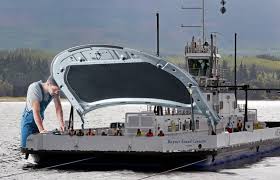
- Claiming the Denman cable ferry is a “green asset” despite using two-and-a-half times more fuel than a conventional vessel and requiring frequent annual replacement of one-mile-long stainless steel cable costing an estimated $230,000, shipped from abroad.
- Disbanding the Ferry Advisory Committees that provided 30 years of volunteer community oversight, while claiming to listen to customers.
When 35 coastal leaders representing the Union of BC Municipalities met with Eby demanding accountability for chronic service unreliability, he claimed helplessness as the province is “at arm’s length” from a corporation it created, wholly owns, and subsidizes. When they met with Jimenez demanding the Ferry Advisory Committees be reinstated and a timeline for change to reverse the corporation’s “existential threat” to coastal communities, he claimed he was “out of options” due to having an underfunded and ageing fleet.
This is not political theatre—it is political farce that will continue to be sponsored by taxpayers who witness funding for affordable housing, healthcare and jobs cut due to rising provincial debt and Eby’s resolve to keep the farce performing. Without transparency and reform, customers and taxpayers will continue funding executive payouts that reward them for a deteriorating essential service and fracturing marine highway. How long will this farce keep running that shields BC Ferries executives, the regulators and government from accountability?
More Art, Less Commerce?
More Art, Less Commerce? By Cylon2036. We/Us
In the once pure meadow of Handcrafted Virtue, beneath the fluttering prayer flags of Ethical Intent, the Local Artisan stands hunched over a reclaimed barn-wood workbench, whispering apologies to the spirit of Late Capitalism before scanning a QR code.
Behold the potter, who once shaped clay in defiance of Babylon, now muttering, “Tap, insert, or credit?” as a square white rectangle, the sacred Tablet of Transaction, glows with the cold light of Visa. Observe the weaver, braiding ethically sourced alpaca into scarves of resistance, only to slap on a price tag that reads $48 plus tax), thereby surrendering her soul to the Marketplace Leviathan.
They told us they were different. They said they were “community based,” and “intentional.” But now we see the truth that they have booths. They have branding and they have Facebook. On Saturdays, under the solemn banners of the Farmers & Artisans Market, these gentle makers engage in the most depraved ritual of all. An exchange for money.
The woodworker sands his cedar cutting boards with monk-like devotion, then, without shame, calculates a margin. A margin! As if survival itself were a line item on a spreadsheet of moral compromise. He murmurs about “covering material costs,” as though birch plywood were not a gateway drug to full-blown commodification.
And the soap maker, who once denounced Big Detergent in hushed kitchen-table circles, now hawks lavender bars like a perfumed peddler of domestic conformity. “It’s small batch,” she insists, as if scale were the only sin. Yet she accepts cash. and she makes change. She even rounds up. This is how corruption begins.
First, you knit mittens to keep your neighbours warm. Next, you attach a price tag. Then, before you know it, you’re offering bundle deals. “Three for twenty.” Three! For twenty! The language of empire! The baker who once gifted sourdough loaves in acts of carbohydrate solidarity now speaks casually of “overhead.”
Overhead, that invisible ceiling pressing down upon her moral skylight. She claims she must pay rent for the commercial kitchen, buy flour, perhaps even electricity. Excuses, all of it. In the golden age of barter, did the blacksmith complain of forge insurance? Did the cooper speak of booth fees? No. They simply perished quietly, unmonetized.
And what of the jeweller, hammering silver into talismans of authenticity? He declares that each piece is “one of a kind,” yet suspiciously produces several that look almost identical. Is this not mass production in an artisanal mask? The revolution was not meant to have SKUs.
Even their rebellion is curated. They decry global supply chains while awaiting their shipment of biodegradable packaging. They scorn corporate logos while refining their own. They reject the “rat race,” yet race to secure the corner stall with optimal foot traffic. All the while, they whisper the most scandalous justification of all: “I have to pay the bills.” Ah yes, bills! The ultimate collaborator.
For in the end, what is a local artisan but a small-scale participant in the Great Bazaar of Necessity? They do not topple the system; they table at it. They do not abolish commerce; they apply for a vendor permit. And yet, how cunningly they disguise it! They call it “supporting local.” They call it “community resilience.” They call it “keeping the money here.”
As though currency, once baptized in proximity, becomes holy. Let us be honest. These crafters are not outside the machine. They are its hand-stitched accessories that sand its edges. They glaze its ceramics and embroider its tote bags. They survive, which of course, is the most unforgivable act of all.
For in this fallen world of invoices and invoices-to-be, even the purest maker must kneel before the altar of transaction, whispering a benediction over the debit terminal: “May my square reader forgive me, for I have priced.”
The Book Report
The Book Report
By A Bae Hel
I read a lot of books. A LOT. There have been phases in my life where I was too busy or too tired to read. Books have carried me through the best of times and the worst of times. They are the friends we never knew we needed, happy to be shoved into a bag, gathering dust on a shelf, lost under the seat of the car. I am not an expert on literature, but I am willing to explore the genres and find something to engage my mind and hopefully, create growth. I used to be a book snob; only reading the paper kind. Then when I was traveling quite a bit, I discovered the magic of kindle, carrying a library with me. I started dabbling with audiobooks to find a means of providing my mum, who was losing her sight, a means of stimulating her mind. Now I vary between the technologies to get my daily fix.
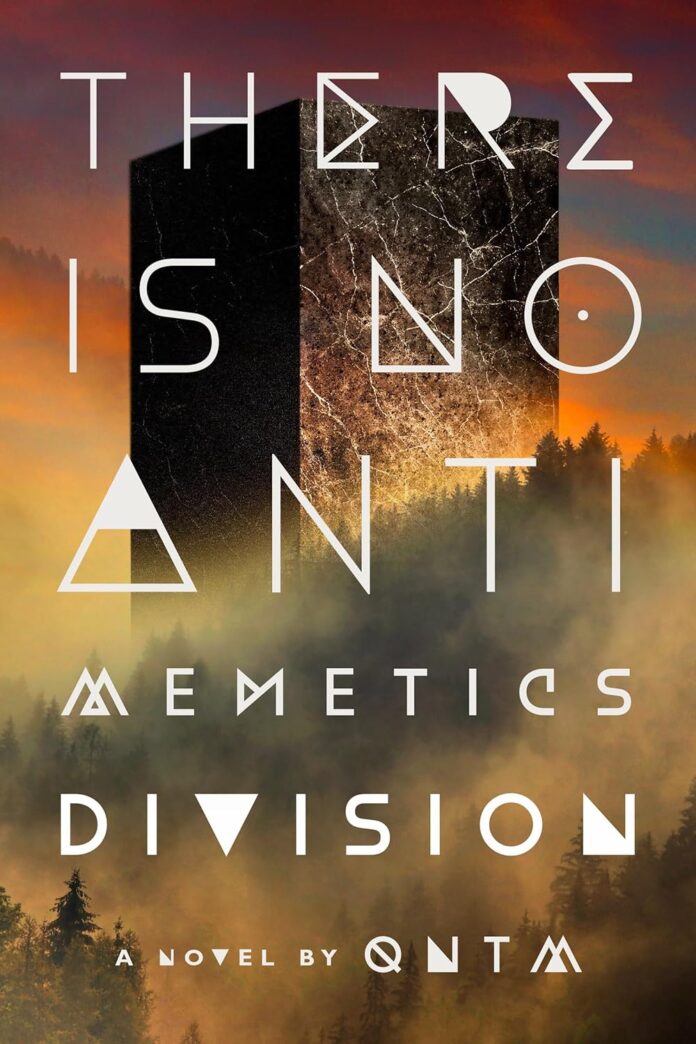
There is No Antimemetics Division by qntm
Audiobook on Audible
What the hell did I just read?
Occasionally, and it seems to be very rarely these days, you emerge from a book with confusion and wonder at the mind that created whatever it was you just read. I think the last one was Naked Lunch by Burroughs. That was a wild ride.
But this, this was within the science fiction genre, but science fiction we rarely see anymore. Science fiction with a reality completely unrelatable to our current one, except that there are humans. Mind you, some of them are simply shells for the vast and terrifying entity that is slowly, or rapidly sucking up their memories. These entities are intellectual viruses, meme ideas that overwrite your reality. The monsters among us, unperceived are feeding on memories, and memories are how we define who we are. When your memories are gone, what, or who are you? Do you exist?
I am reminded of the nameless horrors of Lovecraft and the Silence of Doctor Who. The writing is cleverly crafted to engage and build the terrifying philosophical mystery evolving in installments and snippets before you. Do ideas create reality? Can a meme start a war? End an empire? Destroy a civilization? Why can’t I remember any more?
The characters are likeable. It is tragic and scary and puts the best of science fiction and horror together on a plate for you to subsume into your psyche and to grip your imagination for days after.
I recommend. I give this one- 5 sleepless nights.
Avi Lewis Statement on U.S./Israeli Attack on Iran
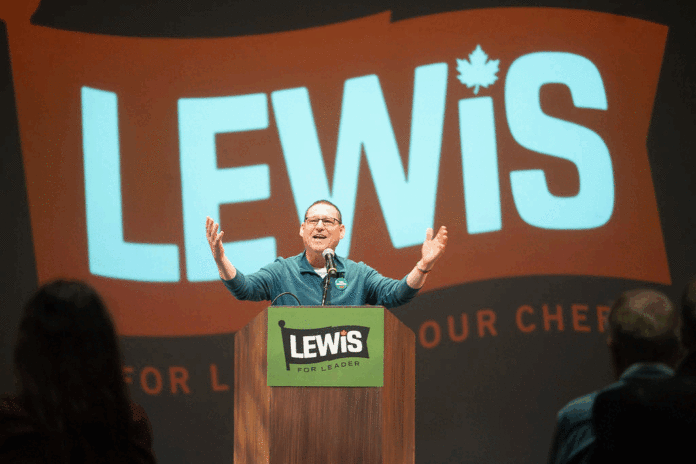
The images coming out of Iran are already unbearable. Reports of an elementary school struck by missiles, killing dozens of people, with scores more killed around the country. Fear and chaos in the streets as families run through smoke and search for safety.
The United States and Israel have launched an illegal act of war while Donald Trump and Benjamin Netanyahu speak openly of regime change. This is what Prime Minister Mark Carney says he supports. He has issued a statement so brazenly belligerent that even Conservatives like Jason Kenney are cheering it on.
It’s a shameful moment that buries all of Carney’s high-minded rhetoric in Davos under the rubble.
These leaders justify this war as serving Iranian liberation. But the courageous movement in Iran that has been fighting tyranny for nearly five decades — and is still reeling from the worst massacre in the country’s modern history in January — will suffer a massive setback from these foreign bombs.
We remember the disastrous outcomes of previous U.S.-led wars of regime change in the Middle East, including in Iraq. They led to hundreds of thousands of civilian deaths, sectarian conflict, and a world that is less safe, not more. The current attacks on Iran must stop now, before the entire region is plunged into conflict, death, and destruction.
My thoughts are with the people in Iran and around the world who are watching this unfold with heartbreak and uncertainty.
Freedom will not come from military intervention by outside powers, it can only come from the Iranian people. War is not the way.
Shuckiung Oysters: Operation Epic Fury

Shucking Oysters: Operation Epic Fury
By Alex Allen
Was it to stop an Iranian attack? To join in an Israeli attack? To kill the Iranian regime? To punish Iran for failing to give in to the US? To make Iran Great Again? Or the original justification to stop an Iranian nuclear bomb? This is the erratic action of the “Peace President” who feels alive only in a state of chaos.
Trump did admit that the attack, which was not approved by Congress or has little support from Americans, will mean that “lives of courageous American heroes may be lost, and we may have casualties.” And for the challenged, “That often happens in war,” Trump helpfully explained. The president also made a direct call for the Iranian people to “seize control of your destiny” and “take over your government” once the US has finished bombing it. “It will be yours to take. This will be probably your only chance for generations,” Trump said.
It’s so Donald to do this in the middle of the night. It appears that Israel started bombing Iran around 1:30 am EST, and US forces joined in 30 minutes later. That’s 10:00 am Tehran time when everyone is going about their business. “Our objective is to defend the American people by eliminating imminent threats from the Iranian regime, a vicious group of very hard, terrible people,” Trump posted at 2:30 am. Later, addressing the “proud people of Iran,” he said that “the hour of your freedom is at hand … When we are finished, take over your government. It will be yours to take.”
But why now, and in this way? Michael Tomasky wrote in the New Republic, “I’m not in Trump’s brain, but having regrettably spent numberless hours this last decade trying to plumb that brain’s mouldy depths, I hazard the educated guess that he wanted to make the whole thing as outrageous to normal opinion as he could.” That is, he knows the people who support him will back whatever he does whenever he does it – he can always count on that.
The sheer audacity is that while Trump launched a full out war with Iran he was schmoozing at an extravagant gala at his Mar-a-Lago club. The black-tie event was hosted on the fateful Friday evening by the Palm Beach-based nonprofit Place of Hope, which describes itself as a “faith-based” organization “providing care for children and families in South Florida.”
It was a night of auctions and raffles, both silent and live. Raffles included a $4,000 Cruise on the Fly, an $8,750 African Plains Exploration, a $30,000 Ernst Benze custom watch and a $6,400 Blow Up a Car moment. That’s right the winner will enjoy an unforgettable private shooting experience highlighted by a thrilling target car shoot featuring machine guns and a Barrett fifty calibre rifle.
The items for auction said it all. At a value of $45,200, Legacy in Leadership. It’s as if Melania wrote the descriptive words. This collection consists of a one-ounce gold coin and two original oil-on canvas paintings, “united by a shared exploration of leadership, conviction, and defining moments in modern American history.” The first painting presents Trump and Charlie Kirk alongside the blindfolded Lady of Justice, “symbolizing a nation suspended between ideology, law, and moral consequence. The composition invites reflection on accountability, authority, and the tension between principle and power within the American justice system.” The second painting features Charlie Kirk with his fist raised, “set against a storm of fractured colour and gold,” reflecting the “cultural turbulence and ideological conflict, framing speech, belief, and leadership as acts of resistance.”
Other auction items: the $8,500 Trump “Dark MAGA Edition” Prestige Colt 45, with 24-karat gold accents, featuring detailed engravings of President Trump. Or perhaps the 24-karat gold $8,500 Trump Gold Signature Engraved Colt 45. It “commemorates a significant moment in modern American history,” and includes engravings of President Trump, the phrase “Fight Fight Fight,” with a “raised fist symbolizing perseverance following the attempt on his life, all meticulously rendered to create a powerful and cohesive presentation.” Another auction item valued at $6,000 and donated by Laura and Eric Trump, two guests can attend the New Year’s Eve gala at Mar-a-Lago.
There’s a theme with the sponsors. Either they are investment companies, family foundations or all about improving your looks. One Gold sponsor of the event stood out, Dr. Nicholas Perricone, an American dermatologist and author of such books as Forever Young: The Science of Nutrigenomics for Glowing, Wrinkle-Free Skin and Radiant Health at Every Age. Fun fact: He opposes the use of Botox. Other sponsors: Dr. Christopher Olenek of Aesthetics and Longevity, Diamante Medical Skin Care and some dental conglomerate.
The black-tie event was chaired by Marla Paxson, her daughter Nicole Paxson, and Dr. Arghavan Welch. Backstory, Marla’s first husband was Lowell W. “Bud” Paxson, founder of the Home Shopping Network in the 80s, who’s worth was nearly $70 million when he sold his stock in 1990. Paxson then created Paxson Communications, with TV stations, AM and FM radio stations and broadcasting rights for local football games. While his broadcasting success has made him rich enough to afford a Palm Beach mansion, it also allowed him to enter less-material pursuits, such as financially supporting the spread of Christian messages through his Christian Network.
And the other chair of this extravagant gala, Dr. Arghavan Welch. Welch and her team at the “state-of-the-art boutique” Palm Beach Gardens Orthodontist reassuringly share that “here, you’ll always be known by name.” And not only is Dr. Welch a member of the American Association of Orthodontists and American Dental Association, she is bilingual in English and Farsi. Farsi is the language spoken by over 57 million speakers in Iran. Did she not see the irony?
Prime Minister Carney’s response has drawn a lot of criticism. I see a more nuanced reaction: “Canada supports the United States acting to prevent Iran from obtaining a nuclear weapon and to prevent its regime from further threatening international peace and security.” As Thomas Juneau, a professor at the University of Ottawa’s graduate school of public and international affairs, criticizing the American actions wouldn’t have had an impact on the conflict but it could have hurt Canada’s position with Trump. “For Canada to oppose, to lecture on human rights or on international law would have been costly in the sense that we know that Trump remembers this stuff,” Juneau added.
“This is not Iraq. This is not endless,” helmet-head Hegseth said at a press conference after the weekend. “We fight to win, and we don’t waste time or lives.” Say that to the parents of the 165 girls attending elementary school who were bombed and killed by one of the strikes all “for their hour of freedom.”
The Fig Tree of the Unending Afternoon

Gabriel Jeroschewitz, February 2nd 2026,
The Fig Tree of the Unending Afternoon
I arrived in the Garden not because I believed, but because I was invited.
Invitations are rare in my life, and rarer still when they are written in gold ink on vellum smelling faintly of burnt honey. It was signed The Son of Man, though I suspected the handwriting belonged to a parish secretary with a fondness for unnecessary loops in her capital letters.
The Garden was not Heaven, exactly. It pretended to be. The sky was a lavish smear of violet and coral, always the same hour, as though the sun had forgotten how to move. Angels—both male and female—wandered about without clothing, utterly unconcerned, playing elaborate games of chase among the roots of the great Fig Tree of Life. They were beautiful in that annoying way beauty can be when it is confident of its own permanence. Their skin caught the light like polished bronze, and their laughter was a thin silver thread that stitched the air together.
I had expected hymns, incense, perhaps the stern architecture of virtue. Instead, there was a smell of figs and wine, and the angels were constantly running away from one another, sometimes stopping to wrestle in the grass, sometimes kissing with a seriousness that made me look away.
The Son of Man was seated under the Fig Tree, wearing nothing but a crown that seemed to have been carved from the bones of extinct birds. He gestured for me to sit.
“You’ve come late,” He said, in a voice that was both kind and sharp. “The cities of Israel are nearly walked through. I told them they wouldn’t finish before I returned, and here I am—right on time.”
I looked at Him and thought about the faces of those who had waited for centuries. “It’s been more than a lifetime,” I said.
“Yes,” He said. “Time is flexible. I meant ‘soon’ in the way figs mean ‘ripe’—which is to say, whenever the fig chooses.”
The angels behind Him were playing a game of stealing one another’s halos and tossing them into the Tree’s branches. The halos hung there like moons caught in a net.
“You told them not to worry about tomorrow,” I said. “They stopped planting trees, stopped repairing roofs. Some died with nothing but the clothes they wore.”
He smiled. “What use is tomorrow if you own today? They misunderstood the symbolism. Tomorrow was a metaphor for the unnecessary.”
“And Hell?” I asked.
At that, His smile thinned. “Ah, Hell. You disapprove.”
“I think everlasting punishment is an indecent invention,” I said. The angels had stopped their game and were listening now, their nude bodies gleaming with sweat and fig sap. One, a tall woman with hair like spilled ink, leaned against the tree trunk and smirked.
“It’s not punishment,” He said. “It’s theatre. Did you not notice how much people enjoy imagining other people in trouble? Hell is an opera—endless arias about regret. The damned are the actors. The saved are the audience. The scenes repeat. Nobody actually suffers—at least not in the way you think. They perform suffering.”
“That’s monstrous in its own way,” I said.
The Son of Man shrugged. “Monstrousness is part of the art. Without it, the moral architecture collapses.”
One of the angels, male, with the face of a young soldier, approached us. “Master,” he said, “the wailing chorus is ready. Shall we begin?”
“Later,” said the Son of Man. “We have a guest who doubts.”
“I don’t doubt everything,” I said. “Only the fear you’ve sown. The sin against the Holy Ghost—do you know how many people have lived in misery thinking they committed it?”
He leaned back against the roots of the Tree. “The Ghost is the most fragile symbol. To speak against it is to fracture the grammar of the cosmos. Those who do so fall into silence. And silence, my friend, is the only unforgivable state. Without speech, there can be no meaning.”
The soldier-angel laughed and began chasing the ink-haired one again. Their bodies flashed between the leaves. The Fig Tree itself seemed amused, shaking down fruit that landed with a wet thump.
“You enjoy wailing and gnashing of teeth far too much,” I said.
“You enjoy watching it,” He replied. “Your disbelief is just another form of attendance. Without critics, theatre dies.”
The angels had now gathered around us, forming a circle. Some lay on their backs in the grass, idly touching one another, their eyes fixed on me. Their games were constant, yet they listened.
“I wonder,” I said, “what happens when the last believer dies. When there is nobody left to fear Hell or hope for your return.”
The Son of Man picked a fig and split it open. Inside was not flesh but a small, perfect flame. He held it out to me. “When the last believer dies,” He said, “the Fig Tree will close its leaves. The angels will be free to wander beyond this sky. And I will go to sleep.”
“Forever?”
“Or until someone reinvents Me.”
I hesitated, then took the flaming fig. It did not burn, but I could feel it humming in my hand. “Why invite me here?” I asked.
“Because you are an observer,” He said. “Observers are the only ones who see the patterns—the semiotics, as your philosophers call them. Believers are blinded by the literal. They think the angels are symbols of purity. You see them for what they are—joy without purpose.”
At that moment, the ink-haired angel darted forward, snatching the fig from my hand. She bit into it, and the flame vanished. Her lips glistened. “Purity,” she said, almost laughing. “We were pure before He was invented. We’ll be pure after He’s forgotten.”
The Son of Man looked at her with something like irritation. “Run along,” He said.
She did not. She lay down in the grass beside me, smelling of figs and warm air. “We run because there is no arrival,” she whispered. “We play because there is no work. And we kiss because there is no death.”
I looked at the Son of Man. “She makes more sense than you.”
He nodded. “That is another defect in my teaching. I underestimated angels.”
The soldier-angel had climbed the Fig Tree and was shaking its branches until fruit fell like rain. The ink-haired one laughed and rolled onto her back, catching figs in her hands.
“So,” I said, standing, “I’ve seen your Garden, your Hell-as-theatre, your angels without shame. I see the symbols, but I also see the flaws. What am I to do with this knowledge?”
The Son of Man shrugged. “Tell it as a story. Make it surreal so that no one will mistake it for doctrine. And make it amusing, so they will forget to be afraid.”
“And if they don’t forget?”
“Then plant a tree in your garden,” He said. “It will outlive their fear.”
I left the Garden without ceremony. Behind me, the angels resumed their games, running under the still sky, their bodies moving like punctuation marks in a sentence too long to read. The Fig Tree swayed, heavy with fruit and symbols. Somewhere in its branches, the halos still hung, waiting for someone to reclaim them.
Monster Hunters ch.10

Monster Hunters ch.10
By Quinn Ireland
The first rays of sunlight painted the tops of the trees. These trees overlooked the group of tree-homes that housed the students. They also provided the western border that divided the forest from the Monster school grounds. As the tips of the ancient giants touched the golden sunlight, it made a unique, magical bled of colors.
“Green meets Gold” Ben thought as he opened his eyes to the golden morning glow; “Nature meets warmth.”
Both were extending
The trees from their roots.
The sunlight from the sun.
From the sun to the earth.
Green meets Gold.
After an early breakfast of oatmeal and raisins, it was off to Special Power Practice. As the trio made their way down the bridge, Ben got his first glimpse at something that he had not noticed before. Peeking through the trees were several Mountains. They each towered above the forest that bordered the Monster school grounds. The size of the Mountains compared to the thousands of trees that covered the rocky giants, made the trees look like leaves. As if the two monstrous mountains were the forest floor and the trees were the leaves that coated the ground. As the morning wind began to pick up, the trees that hung on the edge of the mountains rustled. It looked as if they were waving.
Waving to Ben…
Greeting him…
S.P.P was the easiest class to get to by a landslide. It took ten minutes to walk from the tree-homes to the rather plain, underground classroom of Special Power Practice. Although, five of those minutes were taken up by nothing else than a drink of water. As they had been walking, Kepler pointed out something to Johnny. They steered Ben off to an off leading path that stretched into the forest. The forest itself looked magical. Roots jangled out of the edges of cliffs and snaked along the mountains of rocks. The rocks seemed almost as tall as the trees towering above the forest floor. Moss coated the monstrous boulders creating a wall of bright green. Budding out from the moss, were new, young baby trees. Leaves and pinecones covered the entire ground and crunched with every step. Huckleberries and Salmonberries grew abundant, lining the bushes with nature’s sweet, tasty candy. A thin, skinny river ran between the two walls of rocks that created the riverbank. Plants clung to the rich, dark soil, as if they were hanging on with their very lives, which they were in fact. Ben adored the wonderful scenery; it looked like spring. “C’mon,” said Johnny skipping down to the river, as though he was a happy little kid again. He had then produced from his pocket three small bottles. They each had the Monster school logo on them. He then dipped the bottles into the wonderful, blue water and gave Ben and Kepler a bottle each. “Bottoms up!” He said with a smile. As the water passed by Ben’s mouth, it trickled down his throat and he immediately decided it was the best water he had ever tasted. It was cool and refreshing, clean and delicious. “Keep that in your pocket.” suggested Kepler, “It stays cold all the time, no matter what weather, the Heaven River provides for the students and staff of Monster school. “It is called the heaven lake because the water tastes like its name, heaven. After tucking away the bottles, they proceeded to S.P.P. The three entered through the massive fancy iron doors that loomed above them. Ben followed Johnny and Kepler to the basement of Monster school. It was not your typical basement. It was very spacious and well-lit, with cavernous walls. The three entered through the fancy massive iron doors that loomed above them. Ben noticed that there were lots of students there. It was identified as a classroom if you could call it that. This was, according to Johnny, the second most popular class behind workout hour. Besides being a most enjoyed class along with workout hour, S.P.P was filled with similar equipment to the number one ranked school activity. It was identified as a classroom if you could call it that. The walls were dank and bear with only a few pieces of equipment. There were big comfortable mats and all sorts of pillars that were being thrown against the wall by a few kids. They look like they’re asking for an office visit, Ben thought to himself. There were also contraptions that resembled a punching bag, twenty feet tall and ten feet wide. Suddenly, all attention was directed to a tall, lanky man. He sported a long, white coat with matching pants and black shoes that looked to be shined quite often. His handlebar mustache ended at his neck and was the same as his hair color white, blonde. His piercing blue eyes seemed to have a life of their own as they danced around his pupils. He stared at Ben with a serious look on his face. “That’s Mr. Zephaunie, the meanest Teacher in the whole school,” whispered Johnny. He then cracked a joke; “The walk to Mr. Zephaunie’s classroom is almost as short as his patience.” Ben snickered. Johnny had always been one for making him laugh. Ben thanked Johnny for giving him the heads up. Right on cue, Mr. Zephaunie walked over to Ben and whispered; “If you think you can just storm into our world and join our school like it’s no problem at all, then you are way out of line, buddy boy.” He then turned to the rest of the class and spoke; “There will be no talking or disrupting in my classroom, this also includes whispering or any other kind of nonsense,” Mr. Zephaunie finished his list of rules with gusto. “Now, get into groups of two or three.” It had recently become automatic that when there were groups required in classes, Ben, Johnny, and Kepler were together. “Oh, no you don’t!” said Mr. Zephaunie beckoning Ben to follow him. Ben looked at Johnny and Kepler, confused. “Sorry, Ben. I forgot.” Said Johnny; “You have to find out your special power first.” “You are quite right Mr. Maken,” said Mr. Zephaunie with a look that wished that Johnny was wrong. “Now, follow me to my office, Vinkenhut.” Ben reluctantly followed in his wake. Mr. Zephaunie’s office was nothing but a bare, grey room, not counting the dozens of pictures of Mr. Zephaunie plastering the walls. It completely resembled the look of the classroom, boring. So, Vinkenhut.” Mr. Zephaunie began sitting down in his cushiony chair situated behind a swanky oak wood desk, “What is your special power?” Ben shook his head, “I don’t know, Sir.” Mr. Zephaunie smiled for the first time, perhaps because Ben had called him “Sir”. Although the smile only remained for a split second, Ben somehow felt better, not as worried about his time in the office. “I do not know what my power is, but according to my friends… I do have one.” “And you need me to help you find it,” said Mr. Zephaunie finishing Ben’s thoughts. He then made an odd face. A kind of sneer. “I cannot help you whatsoever to find your inner power, Vinkenhut. But it will come to you. Only when you need it most.” He then sat up, crossed the room, opened the door, and motioned for Ben to get out of his office with a sharp head gesture. Ben wanted to ask for more advice. When would he know the time to use his power? And how would he know how to use it? What if his power didn’t work?
When…
How…
What if…
These questions thundered through Ben’s brain. But he found himself walking out the door, intimidated by Mr. Zephaunie with his dancing eyes boring into his own. He walked into the main classroom spotting Kepler and Johnny warming up by stretching. “Well?” Kepler spoke, “How’d it go?” “Just amazing,” said Ben sarcastically. “But what’s your… you know…” Ben finished Johnny’s sentence; “My power, well… I have no idea. All that Mr. Zephaunie said was that my power will come to me… when I need it most.” The next five hours were nothing but pain and misery. Because Ben did not know his special power yet, he was snickered every time he failed to accomplish a backflip or run across the room in ten seconds. Not only were the other students in more shape than Ben, but they could also persevere more work and longer classes of the same thing over and over again. When his head hit the soft pillow that night, he wanted a power. Needed a power. Needed one to thrive in this world. To thrive. To feel safe. But as Ben Vinkenhut’s eyes closed that night, little did he know that a horrific nightmare would leave him feeling far from safe.
Open Letter to the Local Trust Committee – Harlene Holm
Open letter to the Local Trust Committee
I am a past trustee and a contributor to this week’s Grapevine insert by Trust Watch “Mandates Matter.”
This insert (see below) refers to the legal opinion provided by Don Lidstone KC, Senior Partner of Lidstone & Company. The full text of his document appears in the agenda package for the March 10-12 Trust Council meeting and is available to members of the Local Trust Committee (LTC): our two local trustees and the Chair of the LTC.
As trustees, have you reviewed community responses to the Trust Policy Statement (TPS) drafting process from 2019 to 2026? If so, how would you summarize the support shown for a document failing to address carrying capacity as scientifically defined?
In addition, I ask members of the LTC to clearly state their position on the current version of the TPS. Are you aware that the mandate of the Trust has been made so general that the proposed TPS “prioritizes development?”
I look forward to answers to my questions. Once the TPS is adopted by the Trust Council––to which you all belong–– our Land Use Bylaw and Official Community Plan will be ‘guided’ by that TPS.
Harlene Holm


Letter to the Editor – Graham Brazier

Today’s insert by Salt Spring Island journalist, Frants Attorp (see below) is alarming for those of us who live in the Gulf Islands and have embraced the mandate of the Islands Trust “to preserve and protect the trust area and its unique amenities and environment for the benefit of the residents of the Trust Area and of British Columbia generally ,,,” Most often expressed as the “Preserve and Protect” mandate. Over the course of the past 10 or so years it has been evident that some Trustees, primarily those elected in the southern gulf islands have sought to reinterpret and or circumvent regulations in favour of growth and development. For many of us on the more northern islands the legal opinion quoted in the insert creates some hope that this trend will come to an end and, with public support of trustees from northern islands, and progressive trustees from throughout the Trust Area the “preserve and protect” mandate will be reinvigorated.
Graham Brazier