Home Blog Page 27

The Year of the Ice-Lipped Moon and the Incident with Mrs. Pettifore

Gabriel Jeroschewitz, November 17th, 2025, inspired. By Dylan Thomas, and his beautiful Christmas poem.

The Year of the Ice-Lipped Moon and the Incident with Mrs. Pettifore

It was a Christmas so much like the others that I cannot swear whether the snow came in six-day barrels when I was twelve, or in twelve-day rivers when I was six. All the Decembers of my early life were ladled from the same steaming pot of white nonsense — all tumbling down toward the edge of our sea-bound town like a drunken moon with frost-bitten cheeks.

There, at the rim of the fish-freezing shore, I would plunge my mittened hands into the memory-snow and pull out whatever my fingers could hook: a whiff of burnt plum pudding, a shriek from someones aunt, a cat with political ambitions. I have found many things in those snowdrifts over the years, but the finest discovery, and the one that holds its own particular corner in my brain, was Mrs. Pettifore and the firemen. It was on the afternoon before Christmas Eve — the hour when the world is between essential events and idle mischief — that I leaned against the frost-crusted wall of Mrs. Pettifores garden, waiting for cats with her son Gregory. We were equipped with socks on our hands (for stealth), fur hats pulled low over our eyes (for intimidation), and a bucket of ammunition in the form of compact, professionally produced snowballs.

These cats, mind you, were no ordinary Christmas cats — sleek as black-market otters, long as a council meeting, and with whiskers so bristled they could have been used to rouse an orchestra. Gregory and I were sure they were spies for the rival street, and thus deserving of a swift pummelling. We squatted like Hudson Bay trappers who had somehow been stationed for duty in Suburban Wales, our eyes narrowed to slits, our breath whispering steam into the muffling silence.

The wise cats, as wise cats do, never appeared. In that deep, hush-laden stillness, Mrs. Pettifores first cry did not carry to us as one would expect. To our ears, it sounded more like the distant braying of a feral seal — or possibly the taunting of the neighbours most obnoxious tabby. But the cry grew sharper.

Fire!” she roared, with sufficient force to knock three icicles off the kitchen eaves. And, as if conducting an orchestra of calamity, she began walloping the dinner gong. The sound clanged across the garden like armour falling down a stairwell.

Gregory and I ran, arms full of snowballs, down the path toward the house. Smoke — grey as boiled socks, thick enough to be cut into slabs for winter fuel — poured from the dining room. Mrs. Pettifore was dancing in the hallway like the tragic heroine of an opera whose words nobody knew.

This was far. We lunged to the open door of the dining room, expecting flames, but found instead Mr. Pettifore standing in a cloud of smoke, slipper in hand, swiping at the air like a conductor leading an orchestra composed entirely of invisible trombones. He looked almost pleased.

A fine Christmas!” he declared, in the voice of a man announcing the birth of a particularly stubborn child.

Call the fire brigade!” Mrs. Pettifore insisted, belting the gong again.

They wont come. Its Christmas,” Mr. Pettifore said, with the serenity of a man who has accepted that several rooms may burn before dessert.Do something!” Mr. Pettifore bellowed, and we obeyed. We hurled our snowballs into the smoke, the dining table, and — I suspect — into a partially completed trifle. It didnt help, but it made us feel heroically involved.

Then we raced to the red telephone box at the corner to summon the brigade. Gregory suggested calling the police, the ambulance, and Old Benny Wilks, he loves a burnin,” but we limited ourselves to the official channels.

The fire engine arrived in a roar of brass and hose, three helmeted titans tumbling out to wrestle the incident into submission. Water was sprayed. Mr. Pettifore escaped just in time, muttering something about the state of British engineering.”And that is when she arrived — Miss Caroline Pettifore, who was Gregorys cousin, my own senior by three years, and possessed of hair like molten chestnut polished under winter light. She was visiting from Cardiff for the holidays, the sort of visitor who made even the milkman wear his clean cap.

She appeared on the stairs in her dressing gown, blinking through the smoke. Everyone stopped — even the firefighters — for there was something about the way she held herself, chin high, as if the entire situation were merely an overly dramatic prelude to tea.

Would you gentlemen care for something to read?” she asked the firemen, her voice the sound of warm sherry being poured.

One of them coughed into his helmet.

I was smitten in the way only a boy can be smitten who has just seen someone offer Dickens to three men in smoke-stained uniforms.

The next day was one of those sprawling Christmases that seem to last forty-eight hours and involve at least fifteen varieties of alcoholic pudding. Uncles moved about like great woolly furniture, Aunt Dorothea wore three scarves simultaneously, and Mrs. Pettifore insisted the incident of the previous day was good luck.”

The presents were distributed in the chaotic Pettifore method: someone shouted, someone rummaged, and someone inevitably unwrapped a gift meant for someone else. There were the practical presents: socks with a circumference fit for elephants, mufflers large enough to double as tents, mittens so ambitious they seemed to be auditioning for the role of glove for a giant. And there were the useless presents: a kazoo shaped like Napoleon, a bottle labelled Instant Fog — For Romance and Misunderstandings,” two tins of biscuits that rattled suspiciously, and a small mechanical penguin whose job remained unclear.

It was among this chaos that Caroline and I found ourselves alone in the hallway, inspecting the contents of a box addressed to Unknown Recipient.” Inside was a paper kite painted with the sort of colours that made the eyes wince — crimson, violent blue, and an orange that was almost morally wrong.

Caroline ran her fingers along its edge.

This,” she said, should be flown somewhere dangerous.”

I agreed instantly, though I had no plan in mind.

That afternoon, under the bruised winter sky, we carried the kite down to the frozen shore. The sea lay flat and sullen, the colour of tarnished spoons, the air sharp enough to shave an icicle. We stood side by side, our gloves brushing in a way that made a boy forget every previous ambition except for more brushing.

She held the string delicately, as if it might have a secret. The wind took the kite up, jerking it toward the horizon, and I stood behind her, keeping watch in case it decided to dive into the waves. The absurdity of the day — the firemen, the mufflers, the mechanical penguin — seemed to fold itself neatly under that moment.

Without looking at me, she said, Im glad the house didnt burn down.”

So am I,” I replied. Or else… we might not be here.”

And then, in that cold, ridiculous setting — wearing a borrowed fur hat two sizes too big, holding a kite painted like a carnival crime — I kissed her. It was brief, soft, and filled with the kind of clumsy determination that comes with youth and mittens.

She didnt laugh. She only smiled, and for an instant the wind seemed to hold its breath.

We returned to find the Pettifores in a whole digestive battle with the remnants of Christmas dinner — Mr. Pettifore carving something that might have been poultry, though it had the stubbornness of beef. Caroline slipped away to fetch more tea, and I sat watching the steam rise from the cups as if I might decode some meaning from it.

That year, that moment, fixed itself like a snowflake in amber. Every Christmas after, whether six nights of snow or twelve, whether cats appeared or not, whether fires broke out or only puddings, I found myself back on that icy shore in my mind — the wind, the kite, her smile, and my belief that time might, just for once, stand politely still.

Years later, I would hear she married a man from Bristol with a talent for building musical furniture. And I would smile, thinking, Yes, that makes perfect sense. But in my mind, she is still the girl who offered books to firefighters and held a screaming kite above a freezing sea on a day the moon slid drunkenly over our town.

New York Times Wants The US Military Built Up For War With China

New York Times Wants The US Military Built Up For War With China

Reading by Tim Foley:

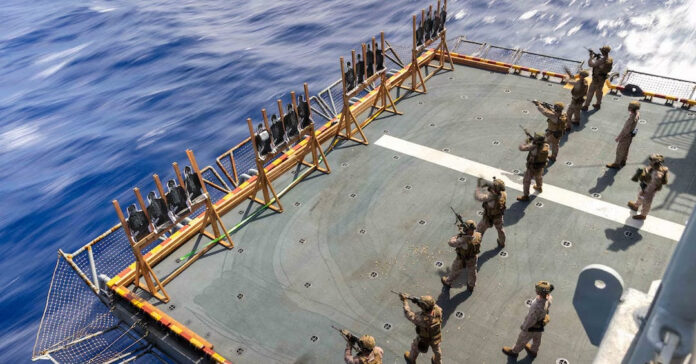
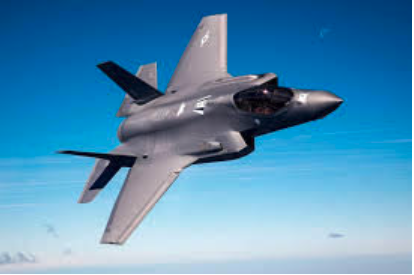
Just as the United States hits its first official trillion-dollar annual military budget, the New York Times editorial board has published an article which argues that the US is going to need to increase military funding to prepare for a major war with China.

The article is titled “Overmatched: Why the U.S. Military Must Reinvent Itself,” and to be clear it is an editorial, not an op-ed, meaning it represents the position of the newspaper itself rather than solely that of the authors.

This will come as no surprise to anyone who knows that The New York Times has supported every American war throughout its entire history, because The New York Times is a war propaganda firm disguised as a news outlet. But it is surprising how brazen they are about it in this particular case.

The article opens with graphics I saw one commenter describe as “Mussolini-core” because of their conspicuously fascistic aesthetic, accompanied by three lines of text in all-caps which reads as follows:

“AMERICA’S MILITARY HAS DEFENDED THE FREE WORLD FOR 80 YEARS.

OUR DOMINANCE IS FADING.

RIVALS KNOW THIS AND ARE BUILDING TO DEFEAT US.”

The narrative that the US war machine has “defended the free world” during its period of post-world war global dominance is itself insane empire propaganda. Washington has abused, tyrannized and starved the world at levels unrivaled by any other power during that period while spearheading the theft of hundreds of trillions of dollars from the global south via imperialist extraction. The US empire has not been defending any “free world”, it has been actively obstructing its emergence.

The actual text of the article opens with another whopper, with the first sentence reading, “President Xi Jinping of China has ordered his armed forces to be ready to seize Taiwan by 2027.”

This is straight-up state propaganda. The New York Times editorial board is here uncritically parroting a completely unsubstantiated claim the US intelligence cartel has been making for years, which Xi Jinping explicitly denies. While it is Beijing’s official position that Taiwan will eventually be reunited with the mainland, not one shred of evidence has ever been presented to the public for the 2027 timeline. It’s a US government assertion being reported as verified fact by the nation’s “paper of record”.

And it doesn’t get any better from there. The Times cites a Pentagon assessment that the US would lose a hot war with China over Taiwan as evidence of “a decades-long decline in America’s ability to win a long war with a major power,” arguing that this is a major problem because “a strong America has been crucial to a world in which freedom and prosperity are far more common than at nearly any other point in human history.”

“This is the first of a series of editorials examining what’s gone wrong with the U.S. military — technologically, bureaucratically, culturally, politically and strategically — and how we can create a relevant and effective force that can deter wars whenever possible and win them wherever necessary,” The New York Times tells us.

The Times argues that the US needs to reshape its military to defeat China in a war, or to win a war with Russia if they attack a NATO member, saying “Evidence suggests that Moscow may already be testing ways to do this, including by cutting the undersea cables on which NATO forces depend.”

The “evidence” the Times cites for this claim is a hyperlink to a January article titled “Norway Seizes Russian-Crewed Ship Suspected of Cutting an Undersea Cable,” completely ignoring the fact that Norway released that ship shortly thereafter when it was unable to find any evidence linking it to the event, and completely ignoring reportsthat US and European intelligence had concluded that the undersea cable damage was the result of an accident rather than sabotage.

And then, of course, comes the call for more military funding.

“In the short term, the transformation of the American military may require additional spending, primarily to rebuild our industrial base. As a share of the economy, defense spending today — about 3.4 percent of G.D.P. — remains near its lowest level in more than 80 years, even after Mr. Trump’s recent increases,” the Times writes, adding that US allies should also be pressured to ramp up spending on the war machine.

“A more secure world will almost certainly require more military commitment from allies like Canada, Japan and Europe, which have long relied on American taxpayers to bankroll their protection,” the authors write, saying “China’s industrial capacity can only be met by pooling the resources of allies and partners around the world to balance and contain Beijing’s increasing influence.”

Of course the idea that perhaps the United States should avoid fighting a hot war with China right off the coast of its own mainland never enters the discussion. The suggestion that it’s insane to support waging full-scale wars with nuclear-armed great powers to secure US planetary domination never comes up. It’s just taken as a given that pouring wealth and resources into preparations for a nuclear-age world war is the only normal option on the table.

But that’s the New York Times for you. It’s been run by the same family since the late 1800s and it’s been advancing the information interests of rich and powerful imperialists ever since. It’s a militarist smut rag that somehow found its way into unearned respectability, and it deserves to be treated as such. The sooner it ceases to exist, the better.

__________________

Caitlin’s Newsletter is a reader-supported publication. To receive new posts and support my work, consider becoming a free or paid subscriber.

My work is entirely reader-supported, so if you enjoyed this piece here are some options where you can toss some money into my tip jar if you want to. The best way to make sure you see everything I write is to get on my free mailing list. Click here for links for my social media, books, merch, and audio/video versions of each article. All my work is free to bootleg and use in any way, shape or form; republish it, translate it, use it on merchandise; whatever you want. All works co-authored with my husband Tim Foley.

Bitcoin donations: 1Ac7PCQXoQoLA9Sh8fhAgiU3PHA2EX5Zm2

Feature image via Adobe Stock.


Phoenix Riting! – December 18th, 2025

The darkest night of the year is fast approaching. Sunday morning marks the official beginning of winter, which as far as Im concerned begins December 1, but there you go. This is the longest night of the year, followed the very next day by three more minutes of daylight. This is the nadir, the ground from which we begin the long climb back to spring.

Its interesting that this marks only the beginning of winter. Every day of winter is slightly brighter than the one before, while autumn works in reverse. Spring and summer are the seasons of light (my favourite time). If you are sensitive to the seasons as I am, winter can be a sad time. Seasonal Affective Disorder is real, and I have learned to keep myself occupied with as many reasons to get up and go out as I can, or by February I forget why I should ever get up again.

Fortunately, here on the coast, February is also when daffodils begin to bloom and the first nettles sprout. I have come to appreciate February, which has the virtue of being short. I digress. I have blessings to count!

This year, we have more fun things going on than ever, and I am loving it, even as I drag myself out of bed to go to a class or to dance. Thanks to New Horizons sponsored classes, a membership gets me into Qi Gong, a strength class, and a writing class, with many more available if I had the time and inclination. Add to that our Ecstatic Dance group (contact me if you would like to join us) and the Songwriter Circle (Mondays at 7 pm at the Arts Centre, everyone welcome), both of which I am holding space, and keys, for, and I have plenty to keep me going through the winter.

Its not just the classes. These groups provide inspiration and motivation to create. I am writing songs and poems and stories and memoirs, and yes, this column again. That is thanks to the Songwriter Circle and several writers groups I am involved in, three every week now.

Thats not even counting my radio show, the Songwriter Circle on Sundays from 1 to 3 pm on CHFR 96.5. You too could have a radio show. Its easy and fun. Sunday evenings have opened up, as I have narrowed my focus to one show and let go of the Album Hours. There are many other open spaces on the schedule.

Thats just what Im involved in. There are many things to do here. You could go to a Pilates class, African or contemporary dance classes, outings to town for theatre or bowling, a book club, a life drawing group, a hiking group, and thats only a partial list. Thanks to the Arts Centre, we have a gorgeous space to meet and dance in, and more arts related events than ever. And we still have our beautiful Community Hall, where we can dance (New Years is coming!) and watch incredible concerts, such as Shari Ulrich and the Unfaithful Servants, that was absolutely stellar and if you missed it, Im sorry.

Depending on the day of the week, we have more places to munch lunch with friends too. Theres the new Thatch, which I havent been to yet but it exists. Theres the Cove. Theres Forage. For the well heeled, theres the Seabreeze, where you can eat, drink, and have all kinds of fun, though not for free. For the less well heeled, Joes Café is open Mondays, Wednesdays, Thursdays, and Saturdays. The soups, scones, and treats are so good, and you can sit by the fire and keep warm. I have been watching the new Vorizo building, wondering when they will open. Mmm, burrito.

Christmas is coming, followed closely by New Years Eve, and I am excited to dance to the Odus Haven Band, aka the Atkinson family and friends, a guaranteed fun time.

This is a departure from my usual opinion-having streak, but its time to take stock. What is there to do on this island in the winter? A lot, it turns out. I dont expect to have time to be depressed. Come to think of it, I had my own long dark winter last summer. I did nothing but lie about on drugs, depressed and in pain. Im better now and excited about this season to come, maybe for the first time ever. I have not been a lover of winter.

Starting Sunday, the days start getting longer. Christmas comes soon after the longest, darkest night. This is a hard and lonely time of year for many, but this year there is a community Christmas feast at Joe King, so no one needs to be alone if they dont want to be. I am sentimental about this season, but also, Christmas let me down so many times, starting with catching my mom filling my stocking at age 6. Oh Santa! I still grieve. My feelings for Christmas confuse me, so of course I wrote a song. Christmas tugs hard on my heart.

To hear my Christmas song, go to my Bandcamp page, phoenixbee.bandcamp.com, and click on Something About Christmas.” You can listen for free or download the track for a dollar. And while youre there, have a listen to my other stuff too, if you like. 

May blessings find you this Solstice, Christmas, Hanukkah, Kwanzaa, Festivus, or whatever form of the season is special for you. There are many ways to celebrate the returning light, and I wish you the very best experience of it.

Thats what I think! What do you think? Email me at phoenixonhornby@gmail.com 

Zenya and Victor

*Non-fiction*

ZENYA AND VICTOR:  by Rosa Telegus

“That was the happiest day of my life, the day my father died,” Zenya told me.

“I cannot imagine that,” I said.

Zenya’s father, Victor had spent three years in the Gulag Archipelago, and wanted his son to be tough, like him, to survive in the world so he could work, work on the family farm.

“We’ll have many children,” Victor had told his wife, Katerina, “to help us on the farm,” this before they owned a farm, Victor working in a plywood mill, Victoria Plywood.  Katerina not speaking a word of English stayed at home, cooking on a wood stove, borscht, piroshki, roast rabbit, cherry pies, in a 1920’s era house in James Bay, a part of Victoria, BC.  Russian friends lived in the basement, all of them sharing their problems and their hopes from the old country.  They had become friends after the Nazis had left Austria, the Russian and Ukrainians now free.  The smart ones left for Canada, not going back as they had been requested to do.

Zenya, the eldest son was beaten viciously by Victor for the slightest misbehaviour, eating a bowl of ice cream in the afternoon, ice cream meant to be shared among six children, a small portion for each, measured out after supper.

Victor had few stories of the Gulag, except that the prisoners only got one bowl of watery fish soup after working all day building towns.  Also – flies in the summer, he remembered, and the German Shepherds held back from attack by long chains held by the guards.  “To prevent escape,” said Victor.  His rages told the real story.  He had been broken.

“I made up my mind not to be like him,” said Zenya.  “He had told me to beat my dog.  At least he put that out to me as an option. ‘You could beat her,’ he had said.  That’s when I decided I would never choose violence.”

Zenya escaped at seventeen to work on deep sea freighters, boats that carried iron ore and lumber, and to drink in all the ports of the world, Nagasaki, Rio de Janeiro, Cape Town.  That is until his father died.  Then he found me, we married, and he kept his vow – never to choose anger.

poo in water

#1714

Continuing Appeals for B.C. Ferries Governance

In the spirit of keeping our communities informed of my lobbying efforts for B.C. Ferries’ governance reform,  I have been corresponding with the Federal Transportation Standing Committee reviewing the corporation’s $lB loan for Chinese-built vessels. This committee is timely, as it offers an opportunity to expose the B.C. government’s refusal to  make B.C. Ferries accountable or introduce legislation that would strengthen governance to avoid the corporation’s failures.  I asked that the loan for the Chinese-built vessels be conditioned with strong governance, as recommended in the l999 Fast Ferries audit, or taxpayers are likely to absorb the debt when the corporation defaults and the Chinese vessels are likely to suffer the same failure fate of their recent predecessors. I mentioned, of course, that the B.C. Ombudsperson has agreed to launch an investigation, but it could take years.  The committee facilitator wrote a “Dear Sharon” response, saying he translated and sent my appeal to the Committee.  Well, I have heard this before from the B.C. Minister of Transportation and the Commissioner’s office!  However, it is also timely that the corporation’s 2024-25 performance report was recently posted that addresses the corporation’s current financial “vessel resilience” and financial crises. Therefore, I sent a followup letter to the committee, asking them to review the corporation’s  proposal to form a “sustainable partnership”  for funding from all levels of government to avoid  a tax hike “well in excess of 35%–within the same governance vacuum. I also sent the following email exchange with MLA Josie Osborne, who appeared to interpret my appeal for an audit of government records of how the corporation spends tax dollars as an appeal to audit the corporation, as proof that the corporation continues to be accountable to no one, with NDP support:

December 5

Dear MLA Osborne:

This follows up your November 12 email claiming that because B.C. Ferries was created as a corporation following the 1999 Fast Ferries scandal, an audit of the government’s oversight failure cannot again be conducted. I am not alone in arguing that B.C. Ferries is not an “independent” corporation, but one totally dependent on ever-increasing, massive government subsidies to stay afloat. By operating in the red, deploying failing vessels needing millions in avoidable repairs, and projecting a 30% fare increase by 2028, B.C. Ferries will likely pass the $1B loan debt for Chinese-built vessels onto taxpayers and continue to drain the public purse with impunity.

The facts are grim: B.C. Ferries wasted $1B of taxpayer money in the 1990s. The 2001 Wright Review attributed this waste to a “baroque” oversight system in which no one was responsible, and accounted for the corporation’s incompetence. Regrettably, that same ineffective oversight system remains intact today.

Instead of correcting the failures of his predecessor—who was replaced due to incompetence—the current leadership is free to perpetuate them. The failed Baynes Sound cable ferry experiment, which has the highest breakdown rate in the fleet, remains in profoundly unreliable service due to “budget reasons.” (Due to an unresolvable design failure, it is currently replaced by the Quinsum.) The new island electric hybrids provide such unreliable service that they are being replaced or rerouted. This pattern of deploying unreliable vessels raises a critical question: Given the corporation’s history, what assurance is there that the Chinese vessels will not also fail? Premier Eby’s announcement that he will not intervene in the Chinese vessel purchase signals that the corporation will likely pass the $1B debt onto taxpayers and continue to drain the public purse–with impunity. This is an untenable impasse.

I am, therefore, appealing to you on behalf of Denman and Hornby islanders to call for reintroducing tabled Bill 7 that provides the government with oversight power by amending the Coastal Ferry Act, and to call for considering the creation of a fully independent and accountable board, as recommended in the Wright Review. The Canadian Federation of Taxpayers demands that B.C. Ferries get off the “gravy boat”; the Conservatives and Greens call for returning the corporation to the Crown. The NDP, however, remains oblivious to the cost of keeping the status quo—both to ferry-dependent communities and to taxpayers. The hundreds of millions, and perhaps billions saved could be allocated to mitigating current crises in health care, affordable housing, and education, or to purchasing new vessels.

Respectfully,

Sharon Small,

Denman Island.

Nov 12, 2025

Dear Sharon,

Thank you for following up on your email requesting an audit of the Baynes Sound Connector, as MLA Osbornes constituency advisor I am pleased to respond.

My apologies for the delay in responding to your email, as we were awaiting information from both the Ministry of Transportation and Transit and the Attorney Generals office. We have now received information from both Ministries and I am happy to share this information with you.

 The Province contracts BC Ferries to deliver coastal ferry services under the Coastal Ferry Act (2003). BC Ferries operates as an independent company overseen by the BC Ferry Authority and regulated by the BC Ferries Commissioner, who ensures both entities fulfill their obligations under the Act and the service contract. The Province does not oversee BC Ferriesdaily operations, these operations are managed by its Board of Directors.

 What we have found out from our inquiry with the Attorney Generals office, is that as an independent company, BC Ferries is not subject to audit by the Office of the Auditor General (OAG) under the Auditor General Act. However, as a publicly traded company, BC Ferries must file and disclose financial information—including annual reports, financial statements, and executive compensation—through SEDAR+ (the System for Electronic Document Analysis and Retrieval), in accordance with Canadian securities regulations. Most reports can also be found on the BC Ferry Commission website here: Compliance Reports – Office of the BC Ferries 

Commissione europea – Rappresentanza in Italia

The Ministry of Transportation and Transit receives regular audit requests from the Office of the Comptroller General (3CMB) under the Ministry of Finance as part of routine monthly desk audits of Ministry expenditures, including payments related to coastal ferry services. In addition, the OAG conducts an annual audit of the Ministrys financial statements and contractual obligations, these audits include reviews of the annual payment schedule to BC Ferries and examine contractual rights, including obligations under the Coastal Ferry Act (2003) and the Coastal Ferry Service Contract.

The audit requests from 3CMB and annual audits by OAG do not include regular operational details of private contracted companies, such as BC Ferries. While the OAG previously reviewed BC Ferriesoperations before the Company was established as a private corporation (e.g., the 1999 Fast Ferry Project audit), routine operational oversight of the Company is conducted by the BC Ferry Commissioner under the Coastal Ferry Act.

The Ministry suggested that you may want to review BC Ferriespublicly available financial information and to participate in public engagement opportunities with BC Ferries and provide feedback, either virtually or in person, when these opportunities arise.

I understand this is not the response you were hoping for, but I do hope this information is helpful.

Sincerely,

Andrea McDonald | Constituency Advisor

office of Josie Osborne, ML

Shucking Oysters: Wuthering Frights

Shucking Oysters: Wuthering Frights

By Alex Allen

Got to love this time of year. Incessant rain, storms, power outages, ferry cancellations and possibly, losing your marbles. These extreme weather events seem to be starting a lot earlier every year. Remember October? We had four power outages, countless atmospheric rivers and a few bomb cyclones. There has never been a more exciting time to be obsessed with the weather. 

Being a meteorologist is not an easy job. If your forecast ends up being wrong, everyone will blame you, and even if you get the forecast right, people will still complain(in Canada). By its nature, forecasting involves prediction. Like tarot card reading, James Howson wrote “telling the future can be accompanied by a vagueness which enraptures and mystifies the beholder.” While Nostradamus may have predicted asteroids and zombies, “the weather forecaster deals with something more prosaic yet not without extreme outcomes.”

Canada has just introduced a new colour-coded warning system, that aligns with the World Meteorological Organization which focuses on what the weather will do (risks, impacts, safety actions) rather than what the weather will be (100 mm of rain). The lowest and most common alert level is yellow indicating localized moderate impacts. These may include Baynes Sound Connector cancellations, flying debris like pine cones and four-hour power outages. The next level, orange, covers more significant damage, like wind / ice storms, falling trees and days of power outages. Red alerts are the most severe, with prolonged dangerous and possibly life-threatening weather, like structural damage to houses or buildings. As the federal government eloquently explained, “Canada’s switch enhances its weather services to meet modern challenges, delivering clear, consistent, and actionable information aligned with international standards for public safety.”

Meanwhile, special weather statements will continue to be used under the new system, as the least urgent form of messaging. The statements typically advise of uncommon conditions and the potential for concern, which on some winter days, can read like Emily Brontë had written them. By focusing on the weather impacts rather than the weather itself, the main goal of the colour codes is to enhance storm preparedness and better communicate how we can prepare in advance. 

Back in the day, a typical weather report would start like this: “Welcome to the weather forecast. Now, let’s see what the weather is like today. In the north it’s very windy and cold. There is a chance of some rain too, so don’t leave home without your umbrella. In the east it’s rainy all day today, I’m afraid. In the west the weather is dry, but cloudy. So no rain for you, but it is quite windy. The south has the best weather today, sunny all afternoon.”

Instead, we get meteorology 101 reports: warned about the atmospheric river weather system that’s going to bring in 70 to 100 mm of rain. Or the bomb cyclone expected to bring wind gusts of up to 100 km per hour. And then throw in a quote from some well-meaning qualified expert: “We’re calling it a big skinny fire hose because when you look at the satellite and the radar it’s really quite amazing how if it shifted to the north or south it would drastically change the outcome.”

As for the bomb cyclone, that’s probably a new one for some of you who are not weather geeks. The Weather Channel (MTV for old people) defines this condition as “having undergone bombogenesis or bombing-out.” It happens when a low pressure system drops rapidly, resulting in a “bomb-like explosion” of winter weather madness. Cool. 

Today, every weather event is “intense,” “severe,” “extreme,” “rapidly deepening,” “aggressive,” “hitting” and “brewing.” It’s like having Mr. Rogers and his neighbourhood taken over by Freddy Krueger of Elm Street. And I’m guessing that you already know that we Canadians are obsessed about the weather. If we can’t incessantly talk about polar vortexes, nine out of ten of us will make a point of checking the Weather Channel at least twice a day.

And it’s not just us. The US has the 24-hour streaming service, Fox Weather. As their press release said, they want to “capitalize on the increasingly frightening state of Earth’s daily forecasts” and “aim to make the science of meteorology more relevant to people’s lives.” 

You can get alerts for 42 kinds of weather and learn about funnel clouds and graupel (a type of soft hail). Fox Weather also has a few storm chasers who race around documenting the many hurricanes and tornadoes ripping across America. Instead of watching fire logs burning 24-7, now you can watch the Kīlauea volcano spewing fountains of lava into the air. Or drone videos of tornadoes tearing through a Houston neighbourhood. You can even learn which FIFA teams will get an edge in the games from the hot weather.

“Weather is ideally suited to the electronic age,” wrote Bernard Mergen, a professor of American Studies, in his book Weather Matters. “It’s constantly in motion, frequently fast-moving… ubiquitous and visually beautiful.” And it’s in this digital age that our interest in the elements is being turbocharged by the growth of weather-related media, especially online.

We talk about weather because it’s an easy topic of conversation, David Phillips, senior climatologist at Environment Canada, points out. “It’s not as if you’re going to get that faraway look when you bring up sex or politics or religion, and people are wondering where you’re going with it. Weather is a safe topic of conversation.” Say, did you hear about the intense, frigid….

Louisa in Shadow and Light

Gabriel Jeroschewitz, November 7th, 2025, dedicated to Louisa May Alcott

Louisa in Shadow and Light

For over a century after her death, Louisa May Alcott existed in the public mind as a literary angel: the mild, moral governess of American letters. We knew her as Miss Alcott,” the tender chronicler of Little Women, that wholesome tale of four sisters learning virtue during the American Civil War. Readers imagined her pouring tea for the March family between chapters, smiling indulgently at their homemaking and quiet romances. She was, in short, the kind of woman about whom no clergy member could wag his finger.

Except—this was a lie.

In the 1860s, Louisa was not yet the moral matron of anyones imagination. She was thirty, unmarried, and wholly responsible for her family’s survival. Her father, Amos Bronson Alcott, was a man of transcendentalist ideas — lofty, shimmering notions about the soul and nature — and utterly devoid of material practicality. Her mother, Abigail, held the fragile household together with sheer willpower and a competence her husband conspicuously lacked. Louisa herself stitched, tutored, taught, and laboured in ways that drained her health but kept bread on the table.

But Louisa was not merely tired. She was angry. Not delicately cross in the manner of a thwarted Victorian heroine — no, she carried a rage that simmered under her corset stays. She saw the cruel shortage of choices offered to women: marriage to the wrong man, or grinding poverty. And she refused to accept either without protest.

So she wrote. Not the gentle moral tales that would later win her fame, but thrillers. Sensation novels drenched in vice and intrigue: women slipping poison into teacups, governesses who were secretly actresses orchestrating revenge, lovers chasing one another across continents with murder in their hearts. Opium dens. Cross-dressing. Violence. Desire. The kind of fiction that could cause respectable matrons to faint dead away from page twelve onwards.

Of course, she could not publish such a scandal under her own name. Society would clutch its collective pearls, and her family would starve. Thus was born A.M. Barnard,” the shadow self under which these works saw the light of day.

Readers of the 1860s devoured them, blissfully ignorant of the authoresss identity. They knew only that Barnards heroines were clever, dangerous, and unapologetically powerful — a far cry from the shrinking violets of conventional literature. Louisa wrote in her diary, with sly satisfaction: I think my natural ambition is for the lurid style. I indulge in gorgeous fancies and wish that I dared inscribe them upon my pages.” She dared — she signed them with anothers name.

Then came the fatal request from her publisher in 1868: write a book for girls.” Louisa resisted. She did not think herself gifted in the sunny art of childrens fiction, and she found the concept dull. But necessity has a louder voice than inspiration. She needed the money.

She sat down and wrote Little Women, loosely based on her own childhood with her three sisters. She delivered it, perhaps with the same feeling a cook might have toward a serviceable soup. But the world decided it was not soup at all — it was ambrosia. The book became an instant sensation, and Louisa May Alcott gained widespread recognition as a household name.

Success, however, proved a gilded cage. Overnight, she was transformed from a struggling author into the moral authority for young ladies everywhere. Publishers demanded sequels and imitations: more goodness, more patience, more virtue. Louisa obliged with Little Men and Jos Boys, stories populated entirely by characters who could be trusted to return your borrowed sugar and speak kindly to one another.

Privately, she seethed. In her journal, she wrote, I am tired of being good. I should like to do something nasty and enjoy it.” But she did not enjoy that freedom again. A.M. Barnard vanished from the literary record. The thrillers went unwritten. Louisa played her assigned role to ensure her familys survival.

Louisa never married. She once remarked shed rather be a free spinster and paddle my own canoe,” a declaration both witty and, for her era, quietly rebellious. Scholars today debate whether she was lesbian or asexual, but all agree she was fiercely independent and privately frustrated by societys constraints.

Her life was hard. She served as a nurse in the Civil War, nearly died from typhoid, and was treated with mercury that poisoned her for the remainder of her days. She continued working, writing, and supporting her family until the end of her life. By then, the public saw only one version of her — the safe version. The other half died unacknowledged.

In 1888, at age fifty-five, Louisa died just two days after her father. She was sick, exhausted, and, in the eyes of serious literary critics, a mere childrens author. Her dark stories, attributed to A.M. Barnard, sat in dusty archives for decades, yellowing in anonymity. It was not until 1943 that the truth began to stir. While researching nineteenth-century publishers, scholar Leona Rostenberg stumbled upon peculiar records linking the mysterious Barnard to Louisa May Alcott. She investigated: manuscripts, handwriting comparisons, and payment ledgers. The evidence mounted until the conclusion was unavoidable — Louisa May Alcott had led a double life.

By the late twentieth century, feminist scholars republished these sensation novels. Students read Behind a MaskPaulines Passion and Punishment, and A Long Fatal Love Chase alongside Little Women. Suddenly, Louisas portrait split into two images: the wholesome governess of girlhood dreams, and the rage-filled rebel who filled her pages with blood and danger.

From one perspective, it is a story of constraint: a woman forced to choose between her authentic voice and her career. But to the mature reader — perhaps sipping a good brandy in a quiet room — the story offers another satisfaction. Louisa did write her truth. She did it cunningly, sidestepping societys bans with a pen name sharp enough to pierce proprietys veil. She practiced public morality by day and murdered by night.

For over a century, the world knew only the palatable half of Louisa May Alcott. But the other half — the dangerous, complicated, gloriously unwholesome half — was there all along, waiting in archives for discovery.

And so, dear reader, consider this: How many women have lived similarly divided lives, their rage and ambition pressed into secrecy? How many polite smiles have concealed murderously sharp minds? How many truths rest even now in dusty boxes, awaiting a curious hand?

Louisas hidden tales remind us to write anyway — even if we must hide the signature. For one day, the truth will emerge. And when it does, the respectable façade will crack, and the whole woman will step into the light.

Just as she always deserved.