Home Blog Page 144

Tree Huggers, Art and Activism

Tree Huggers, Art and Activism

On a cold February day last year, a mutual aid group called Friends of Denman Forests emerged spontaneously to stop the logging of more than 150 trees at Gravelly Bay Ferry Terminal. The cutting of these trees was a part of B.C. Ferries’ planned expansion of the access and parking area at the terminal’s approach. More than 100 people showed up to declare its intentions to block the logging crew and force B.C. Ferries to reconsider their design plans. Members of this group stayed for another 48 hours to make sure that no trees fell until solid assurances were made for that work to stop.

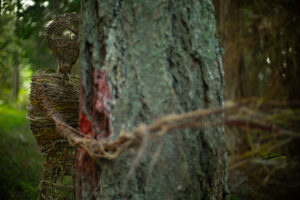
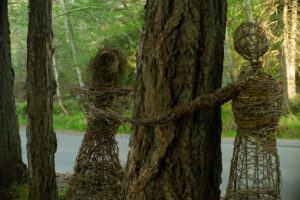
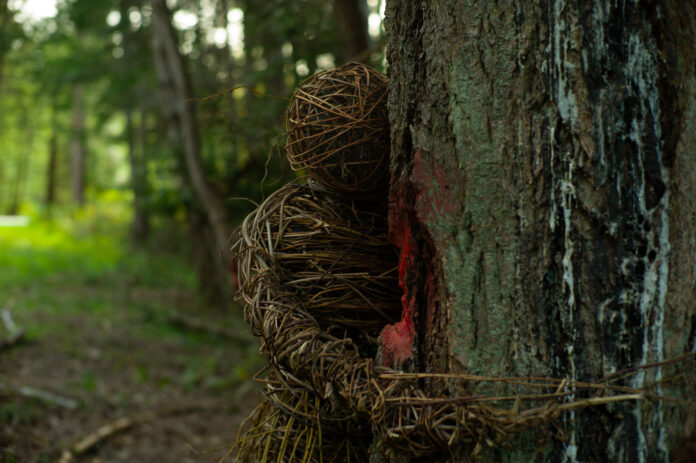
A year later, the trees remain, mostly unscathed, and an extraordinary art installation has taken shape in and around some of these trees, designed and created by an art and activism group called Tree Huggers. Mary Jane Stewart and Joy Brockman began collaborating on sculptures made from branches of a downed weeping willow tree, and from there, Wendy Boothroyd, Lorraine Martinuik, and Cynthia Minden were inspired to create more of these sculptures using basketry willow, maple, bramble, and other prunings. This group was inspired by a similar project in Europe, also named Tree Huggers.


At present, B.C. Ferries has postponed terminal expansion at Gravelly Bay for the remainder of their new contract term, and we can celebrate, at least for now, the success of ad hoc activism that can be credited with protecting this small forest ecosystem and many beautiful and mature fir and arbutus and other species of trees. The direct action of Friends of Denman Forests led to these beautiful activist/art installations, hugging these trees and reminding us of what is possible when we use creativity to imagine the world we wish to see. If you can, go have a look for yourself.

Possible Lessons that can be learned from the way that Covid 19 was handled on a global scale

Possible Lessons that can be learned from the way that Covid 19 was handled on a global scale

     Given the possibility that another pandemic will occur or be orchestrated, depending on your point-of -view, in the next few years, some very interesting issues were raised at The World Council for Health conference in Geneva, Switzerland recently. This is a volunteer organization with no formal leader. It appears to be a truly democratic group, made up of medical professionals from around the world.

                        Here are some of the key questions that were debated:

1- Why were we not told that the Covid 19 virus was patented by Moderna in 2018?

2- Why did Moderna produce 100,000 Covid-19 vaccine doses in 2019 before the pandemic started?

3- Why, against all scientific evidence, were lockdowns and masks used?

4- Why were we not told that the ‘vaccine’ does not remain in the arm, but accumulates all over the body?

5- Why was PCR testing recommended when it is not designed for diagnostic purposes?

6- Why were the definitions of ‘vaccine’, and ‘herd immunity’ changed prior to the Covid-19 outbreak?

7- Why was a pandemic declared when the case fatality rate was akin to ’flu?

8- Why were tests on genotoxicity, teratogenicity, and carcinogenicity not carried out, and yet we were told the ‘vaccine’ was safe?

9- Why was there no proper follow-up of all people injected when using a new gene therapy product?

10- Why were doctors and the public not reminded regularly about the need to report adverse reactions to these new and experimental genetic ‘vaccines’?

11- Why was a ‘vaccine’ recommended during an ongoing pandemic, which is contraindicated in vaccinology?

12- Why was a ‘vaccine’ recommended for those who had superior natural immunity?

13- Why was a novel gene therapy launched after three months, instead of the required ten years?

14- Why were we not told that, in the Pfizer trial, more people died in the vaccinated group than in the control group?

15- Why were we told that Covid injections were ‘safe and effective’ when the evidence did not substantiate this?

16- Why were – and are – opposing voices from science and practicing medicine discredited, punished, and jailed?

17- Why were doctors, for the first time in history, discouraged from treating a disease, and told to wait for a vaccine?

18- Why was early treatment discouraged, whilst we know it is the most important tool to address any infectious disease?

19- Why were effective and very safe medicines like hydroxychloroquine and ivermectin discredited and even prohibited?

20- Why did the producers of the novel gene therapies not want their data to be published for 75 years?

21- Why were Covid injections, masks and lockdowns recommended for children when it was known that they were not severely affected and did not spread Covid?

22- Why were the Covid injections recommended in pregnancy, when over 80% of babies were lost in trials when women were vaccinated in the first trimester?

23- Why was emergency approval guaranteed when over 2,000 people died within the first three months after vaccination roll-out?

24- Why is there no scientific outcry after over 3,500 papers have been published demonstrating side effects of the Covid-19 injections?

25- Why are conflicts of interest tolerated among medical authorities, with the FDA, EMA, and WHO being 80-90% funded by industry?

26- Why was there no adequate education of doctors, patients, and the public, and thus no possibility of informed consent?

27- Why and how were the media captured so that they pushed only one agenda worldwide?

28- Why were and are effective treatment protocols, which have existed since 2020, banned and declared illegal?

29- Why are we not told about the unnecessary deaths that were attributed to Covid but actually caused by iatrogenic measures (e.g. Midazolam, ventilation) carried out in early 2020?

30- Why was the fundamental role of Vitamin D status, diet, and the microbiome not communicated, when these measures could have prevented almost 100% of Covid deaths?

31- Why was and is a certain medical procedure forced upon people against their will, whilst the Nuremberg Declaration clearly opposes this?

32- Why is gain of function research, like that relating to Covid-19, not banned worldwide?

33- Why is an mRNA product still being used, when we know that mRNA is being incorporated into the human genome, and resulting in the production of other, unknown, proteins?

34- Why has the failed mRNA concept not been stopped, when we know it increases the likelihood of the recipient getting Covid-19, thus demonstrating negative efficacy?

35-Why do these products continue to be recommended, when at least 17 million people are believed to have died due to the injections?

36-Why is there no investigation into excess deaths, and increases in rates of cancer and heart problems, etc., which started in 2021, not in 2020?”.

     In my opinion, these are all questions that we should review and reflect upon in light of what happened during Covid. I am hopeful that more and more people around the world  and in our communities on Denman and Hornby Islands will become aware of mistakes that have been made and stand together to prevent them being repeated in the future. Carpe Diem and a hearty toast to that heartfelt goal.

A Global Security System (Part 3)

A Global Security System (Part 3) Sally Campbell

The core premises underpinning World Beyond War are that war is unnecessary, unjustifiable, does not keep us safe or bring security, contributes more to planetary destruction than any other human activity, and can indeed be replaced. If you hear yourself thinking: “Now wait a minute. They’re going a bit far there. Surely WW2 was necessary,” then register for what will be a fine on-line examination of that very subject on Saturday May 4th at 3pm. That’s when David Swanson (co-founder of WBW) will debate Jared Ball, Professor of Communication & Africana Studies, on the topic: “Can War ever be Justified?” (Go to World Beyond War to register).

The manual our WBW book club is reviewing, A Global Security System: An Alternative to War, was originally written by Swanson, Kent Shifferd & Patrick Hiller, with input from a wide range of peace researchers & scholars. It sets out a 3-pronged framework for an alternative global security system (AGSS):

  1. Demilitarizing Security
  2. Managing Conflict Without Violence
  3. Creating a Culture of Peace

The book clearly lays out the structural deficiencies of the current UN (the composition of the Security Council and the veto of the “permanent 5” being prime examples). It describes as well the weaknesses of our system of international law as structured. What is hopeful is that we have established much that is of value for creation of a system of humane global governance – a system that is not immersed in our, now dominant, cultural narrative of militarism.

Our culture of militarism is all-encompassing and elusive at the same time. As “the water we swim in”, we most often don’t notice it; it’s simply all around us. The idea of “us against them” and our competitive, distributional thinking around resources – either “they” get them or “we” get them – complement the mindset. My gentle 6 year-old grandson tells me about his latest video game – Minecraft – explaining the meaning of “pillage”: “The bad guys come to pillage the village, that means take everything, and the good guys in the village fight them off. The hero is the one who goes after the leader of the pillagers and gets him. If I win, I’m the hero.” In this innocent explanation of an exciting game lies the seed of what the field of conflict engagement calls The Drama Triangle, that seductive trap of labelling victims, villains & heroes. The good guys who fight are always justified as long as there exists a villain, no matter the devastation they cause in defeating that villain. My husband recalls the ubiquitous childhood game of “Cowboys & Indians”. The cowboys always won in his game. No one wanted to be an “Indian”. What he has only recently realized, he tells me, is that they were enacting as children a game of genocide. A game where the losers were literally wiped out.

The game that we see unfolding now in Gaza, where Israel, armed, aided & abetted by the Western powers, is hell-bent on wiping out, erasing, the Palestinians from the map. Israelis are the eternal victims; Hamas, which now stands for all Palestinians, are the villains; and the US is, of course, the hero sending the weapons.

What fuels our unquestioning acceptance, time and again, of the good guys/bad guys paradigm, as if it’s about immutable character rather than behaviours? Perhaps we’re oblivious to the pervasiveness of the propaganda our media delivers. Perhaps it’s our deep win/lose cultural conditioning. Or the multitude of distractions in our world. How can we become so numb as to consider “endless war” normal? Endless war is not normal behavior, it is suicidal behaviour.

The madness has to stop. In Gaza, the War System profits by sending more weapons, and Israel continues its cruel rampage unchecked. Now that Gaza’s entire healthcare system has been decimated, we will see vastly more people dying of human-caused starvation, living breathing people who could have been saved if aid were allowed in and medical care was available.

The work of restructuring and rebuilding is going to be massive. Israel-Palestine will have to become a place where all its inhabitants are free and equal, not just the Jewish ones. It is one land that will have to be shared by two peoples; there are plenty of organizations and individuals who can help bring that new reality into being. We must imagine it and insist on it.

The global community will need to bring forward our best ways of problem-solving and we will need to create better narratives. The AGSS manual is filled with ideas and stories from peacemakers, strategists, academics, and global thinkers about life-affirming, non-violent ways of addressing war-perpetuating differences. The power-hungry and the arms industry should not be running the show. Dialogue, mediation, partnerships, peace education, systemic change to address racism and inequality – we have so many avenues to pursue.

As my grandson’s story about Minecraft shows, we can’t insulate our young ones from the values currently being embraced by the general culture. Children see, children do, as the saying goes. That said, many children’s books and games feature cooperative play, integrative stories & non-violent approaches. Yet our predominant system of problem-solving globally is now a War System. It seems to me we have responsibility to figure out and implement other ways than the ones our leaders are currently choosing to resolve conflict – threats, competition, provocation, drones, bombs, retaliation, us vs. them, in endless cycles of violence.

If we as adults can’t imagine better ways to solve problems, how can we expect our children to feel safe and secure, let alone be safe and secure?

Coffee tasting and talk: regenerative farming and Mayan Resilience

Coffee tasting and talk: regenerative farming and Mayan Resilience 

Join us on May 12th at 11am at the Back Hall for a coffee tasting and talk with Neydi Yassmine Juraccan from the Comité Campesino del  Altiplano (CCDA). Come taste this amazing shade-grown Guatemalan coffee, grown in a regenerative polyculture. Coffee beans will be for sale following the talk and tasting. 

The Campesino Committee of the Highlands (CCDA) was founded in 1982 as an organization to defend the rights of workers on large coffee, sugar and cotton plantations, to recover lands taken from the Mayan communities over the past centuries, and to promote and recover Mayan culture and spirituality.

When Guatemala’s armed conflict ended in 1996/97, the CCDA used the peace accords to obtain land for member communities. Some purchased the coffee plantations where their families had been farm workers for generations. Today, those plantations, reorganized as cooperatives, produce Café Justicia, a Solidarity Trade coffee, processed by the CCDA and exported to Canada and other countries. Profits from Café Justicia help finance the CCDA’s ongoing work for land reform, community development and an end to impunity and corruption in Guatemala.

Today about 800 communities in 20 of Guatemala’s 22 provinces belong to the CCDA, but the organization is strongest in the Madre Vieja valley of Sololá

Green Wizardries Preserving the Spring by Maxine Rogers

Green Wizardries Preserving the Spring by Maxine Rogers

The cold weather this spring has preserved a lot of blooms for longer than usual.  My camellia, in a sheltered spot at the edge of the forest, has never been lovelier.  The species tulips are coming in waves, as wildflowers do, and the chilly weather has kept them at their best for longer than usual.  

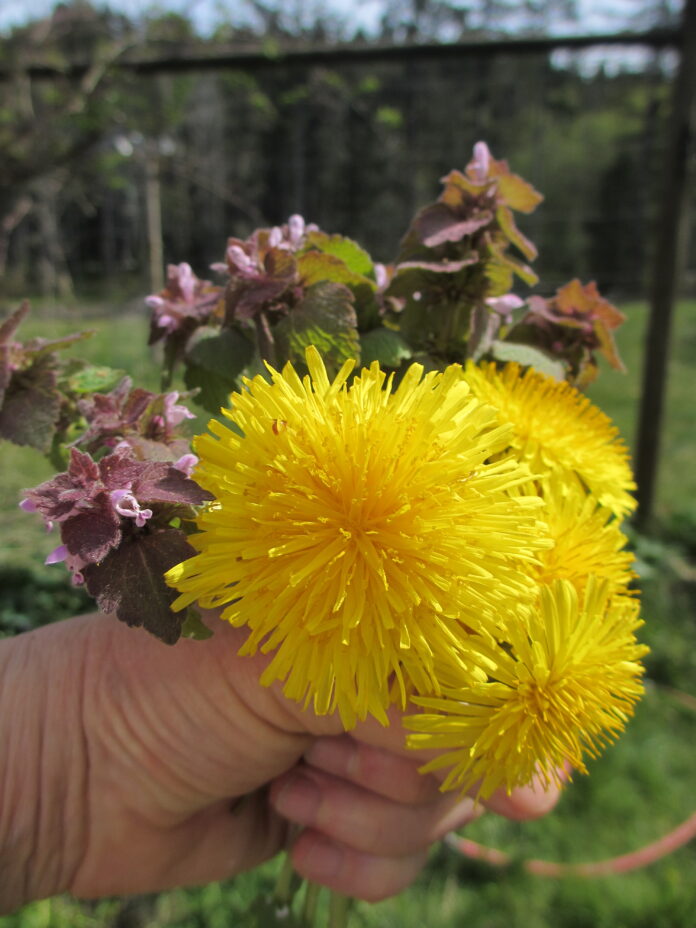
The dandelions are out on the pasture, a welcome feed for the bumblebee queens who made it through the winter.  They need lots of pollen and nectar to breed up the next generation of worker bumblebees. I do collect a dandelion flower here and there, being sure I leave lots for the bees.  I fill a quart jar with dandelion blooms and apple-cider vinegar and I leave that for four to six weeks and strain it.  I use the vinegar for salad dressings.  It aids digestions and I feel it contains some of the marvellous spring sunshine.

I do not have enough dandelions and a friend brought me a box of dandelion plants from her yard.  These are a superior strain and have very large leaves.  I planted them in a row in my vegetable garden as I cannot grow enough dandelion on the pasture to satisfy everyone.  The sheep love dandelions and will eat them to extinction if left to graze a paddock for too long.  Finely chopped dandelion greens are just the thing to feed chicks and ducklings.  I also like to give it to lactating rabbits as the lore states that dandelion is good to increase milk flow.  

 Another weed that is very important for bumbles, humans and livestock is the dead nettle. A friend just taught me about them and they are a wonderful, nutritious spring herb.  The are among the first plants to bloom and they provide some of the first food for the bumblebees and other early native bees.    They are the herbs next to the dandelions in the photo.  These small herbs are good to eat, steamed with other wild greens such as nettles, dandelion greens and chickweed.  They also make a great spring tonic for poultry and rabbits.  I cut them carefully so I do not damage their roots as I consider them a very valuable food, forage and nectar supply.

Dead nettle is a type of mint as you will be able to see by its square stem.  It is an astringent which means it stops bleeding and is also antimicrobial and antiviral.  You can make a salve out of olive oil that you have macerated the dead nettles in.  Always fresh-wilt fresh herbs for a day so they have a lower water content before adding them to oil.  Too much water in the oil can cause mould to grow.  

After steeping the herbs in olive oil in a warm place for four to six weeks, the oil should be strained and bottled and labelled with the contents and the date.  To make a salve, you melt a quarter of a cup of bees wax in a cup of medicinal oil, over a double boiler, and that is all there is to it.  Of course you can add essential oils such as lavender or thyme for scent and for their anti fungal and antimicrobial properties.   

Another herb I like to harvest now is lovage.  I cut small bundles of lovage and hang it from a beam in my living room to dry it for winter use.  Lovage has a strong celery flavour and I like to keep a jar of dried lovage next to the stove in the winter to flavour stocks and broths.  Lovage is also a medicinal herb with a long history of use in ancient Greece and Rome.  A tea made from the leaves helps settle the stomach after overindulgence.  

Last year, I learned about English daisies, the little white or white and pink flowers that grow almost everywhere and are used in the production of daisy chains.  What I learned was the English daisy is the poor man’s arnica.  Arnica is a daisy that grows in the alps and is used for bruises, strains, sprains and sore muscles.  I went out hunting for daisies and found to my dismay that they had all finished blooming.  This year, I was ready for them and went out daisy hunting as soon as the started in the pasture.  

As with any flower, I make sure to pick only a few here and there and leave lots for the pollinators.  Daisies are a special charm for moths and butterflies and they are having a really tough time of it now so we need to help them wherever we can.  

I left the blooms out on a saucer for a day and then added them to some olive oil.  The next day, I did it again and soon had a small jar of oil saturated with daisy blossoms. I will make this oil into a salve and experiment with it.  Daisy blooms dried and saved for winter are useful in treating bronchial colds, coughs and catarrh.  We really do have most of what we need growing right here on our enchanted Islands.

Letter to the Editor – Linda Armstrong

ADDENDUM:

“Innovation, Science and Economic Development (ISED) Canada recognizes the need to have a collaborative and consultative policy with respect to antenna-supporting structures. As such, CPC-2-0-03 Radiocommunication and Broadcasting Antenna Systems requires proponents of an antenna system to consult local communities and respond to all reasonable and relevant concerns. Since municipalities are directly impacted by towers in their community, our procedures also allow municipalities to define their own antenna siting procedures and make informed decisions in regards to providing concurrence for the proposed tower.”

-Bernie Ries, Operations Manager, STS-Western Region

ISED Canada Feb 25, 2023

“Please let us consider carefully this ADDENDUM  presented by ISED Canada. 

– Since municipalities are directly impacted by towers in their community, our procedures also allow municipalities to define their antenna siting procedures and make informed decisions in regards to providing concurrence for the proposed tower.”

What kind of IMPACT do towers cause when installed in a community? 

 How does Hornby Island, being a small residential gulf Island community, welcoming visitors year around,  with a mandate to preserve and protect the Nature that is inherent to this unique Gulf Island do so, when allowing a constant wash of  Microwaves to impact all Island LIFE 24/7?  What exactly does Preserve and Protect mean in 2024 when the WHO still sites evidence re  harmful effects  re Radiofrequency exposures from 2011 and we are now in 2024… is this any assurance at all?   

https://www.iarc.who.int › wp-content › uploads › 2018 › 07 › pr208_E.pdf

PDF IARC classifies Radiofrequency Electromagnetic Fields as possibly …

Lyon, France, May 31, 2011 ‐‐ The WHO/International Agency for Research on Cancer (IARC) has classified radiofrequency electromagnetic fields as possibly carcinogenic to humans (Group 2B), based on an increased risk for glioma, a malignant type of brain cancer1, associated with wireless phone use.

Ignorance and complacency sure does lead to a GRAND slap in the face that stings with every memory of How things used to be…change is inevitable but does it have to be with such disregard for the life potential of insects and reptiles, birds, animals and plant life…not to mention HUMAN BEINGS?

   If there was no problem with exposure to these frequencies, we would see that  ALL the citizens of this world, pre 2012 who were conducting studies and giving lectures worldwide; warning us about the dangers of microwave devices in our pockets, in our cars and homes and neighbourhoods, would be “RETIRED”; unfortunately they are not!  The list is long and at the top of the list is Barry Trower; “THE”  most highly credentialed individual re microwave technology and its effects on Everything.  A very elderly individual, who to this day is speaking continuously to everyone he can sharing this message,  “microwaves have been developed for use as Warfare weaponry and the war is on ALL Biological beings”. 

Arthur Robert Firstenberg (born May 28, 1950)[1] is an American author and activist on the subject of electromagnetic radiation and health.[2] He is the founder of the independent campaign group the Cellular Phone Task Force.[1] He is the author of Microwaving Our Planet: The Environmental Impact of the Wireless Revolution (Cellular Phone Task Force 1997) and The Invisible Rainbow: A History of Electricity and Life (Chelsea Green 2020).

NOW is time to pay attention to ALL the voices of people around the world who KNOW... Radiation from ALL these wireless devices being used today; Cell phones, laptops, smart meters, baby monitors and so many others,  are rapidly damaging the fabric of our lives and the natural world.  We are quickly depleting very valuable resources with this unbelievably wasteful,” latest greatest gadget syndrome” and effectively damaging youthful brains along the way.  This is “THE REALM” of  “Unsustainability“; we must  “Wire in” our technology and stop striving for the latest greatest! 

sincerely, Linda Armstrong 

Letter to the Editor – Theresa Clinton

Letter to the Editor

The Islands Grapevine

Denman Island, B.C.

This letter is in reply to the letter by Linda Armstrong in the April 11th edition of TIG.

I took her advice and checked some things out for myself. Alex Epstein is a self styled 

energy expert. His academic credential is a B.A. in philosophy, hardly the basis for the claim to be an expert, even in philosophy. He also worked for the Cato Institute, founded and funded by the Koch Brothers, ultra rich fossil fuel barons. This institute is dedicated to increasing wealth for corporations and promotes cutting taxes for corporations and industry, reducing environmental protection legislation, and reducing funding for government programmes in Health, social services and education.  See Dark  Money by Jane Mayer for publications from the Cato Institute.

Her stated “Facts” have no citations.

In fact,…

Renewable sources of energy have seen massive reduction in cost. Countries like Denmark now use renewables for most of their energy grid. See Denmark Energy Agency.

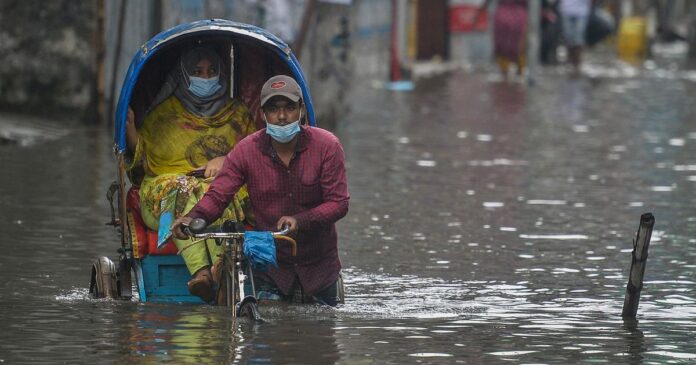
Flooding in Bangladesh in 2022, and 2023, caused by climate change displaced tens of millions of people and their livelihoods. Cyclone Freddy in Feb/March lasted for 37 DAYS off the east coast of Africa. The longest and most vicious storm in history. Can you imagine living through a storm like that for 37 days? These are only 2 examples and the poverty and despair that follows these events is overwhelming.

Fossil fuel health effects. Following the above mentioned flooding, Infant mortality rates skyrocketed by 500%, according to the United States agency for International development.  Closer to home, 600 people died  in BC because of the June 2021 heat dome.

Let’s not forget harm from plastics, another fossil fuel product line. Micro plastics cause increases in heart disease, cancers, lung disease, endocrine diseases, birth defects etc etc. These health data can be found on the Canadian Association of Physicians for the Environment website.

So Ms. Armstrong, checking this out has shown that I should trust real scientists like Edward Teller; who predicted these consequences of fossil fuel industries in 1959 at a conference run by the American Petroleum Institute, and today’s Dr. Katharine Hayhoe, who is a professor at Texas Tech University and Chief Scientist at the Nature Conservancy. These scientists explain the true costs to humanity of this industry. The industry has had huge benefits to humankind, but now the price we are paying is becoming clear.  The path ahead will be disastrous if we do not heed the real experts and change course.

Respectfully submitted,

Theresa Clinton, Denman Island.

Simon Says

Simon Says

Once upon a time, in the good old days, 

people enjoyed eating butter and eggs.  

Then one day, Simon says, 

stop eating butter and stop eating eggs.  

The people heard what Simon says. 

They stopped eating butter and they stopped eating eggs.   

Then one day, Simon says, 

all that stuff was just a phase.  

Some people heard and did what Simon says.   

They went back to eating their butter and eggs.  

Then one day, Simon says, 

I changed my mind – it wasn’t just a phase. 

Stop eating butter and stop eating eggs. 

The people saw it was all a craze. 

They stopped hearing anything Simon says.  

The went back to their butter and back to their eggs.

 And life went back to the good old days.

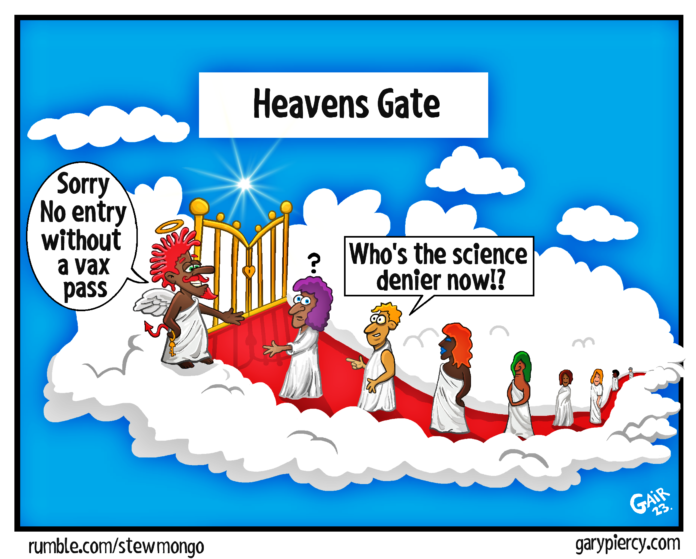
No Vax

Major milestone for Taylor’s checkerspot butterflies in Helliwell

The Taylor’s Checkerspot Butterfly Recovery Project Team is excited to share some great news.

Last year the team released 1,476 Taylor’s checkerspot butterfly caterpillars in Helliwell Provincial Park’s coastal bluff meadows. Many of those larvae metamorphosed into adult butterflies. Several butterflies mated and produced thousands of eggs. More than 1,900 larvae hatched and went through one or more stages before they stopped eating and grouped together in larval webs. The larvae then changed into their overwintering diapause stage. This March, Pascale Archibald and Kihan Yoon-Henderson found more than 230 larvae that survived the winter to continue their lifecycle. 

“This is a significant milestone for the project. It’s the first time since 1996 that we have documented proof that Taylor’s checkerspot butterflies successfully completed their entire lifecycle in Helliwell Provincial Park,” said Jennifer Heron, project lead and provincial invertebrate conservation specialist. She added, “This is a hopeful sign that our coastal bluff habitat restoration work and other Taylor’s checkerspot butterfly recovery efforts in the park are succeeding.”  

This spring, the team released more Taylor’s checkerspot butterfly caterpillars that were raised at the Greater Vancouver Zoo by Wildlife Preservation Canada staff Andrea Gielens. On March 25, representatives of the Hornby Island Provincial Parks Committee, Conservancy Hornby Island, and the Hornby Island Natural History Centre (Neil Wilson, Bill Caywood, Joanne Wyvill, Bill Hamilton, Ondrea Rogers, and Don Peterson) helped introduce 100 larvae to their new home near St. John’s Point in Helliwell Provincial Park. 

On the following day, the team and guest participants released 340 larvae for the first time on Flora Islet, which is also part of Helliwell Provincial Park. The warm, sunny weather was ideal for the caterpillars, and they began searching for food immediately. They didn’t need to go far. They were placed on plantain, which is one of their favourite food sources. Flora Islet may be a great location for the checkerspots – food plants are abundant for larvae to munch, and there are plenty of flowering plants such as spring gold, camas, small-flowered blue-eyed Mary, and sea blush with nectar for the adult butterflies. 

This is a critical period for the caterpillars. They need to find enough high-quality food to be able to grow and transform through their life stages. The caterpillars are tiny, delicate, and vulnerable. Trampling by park visitors and dogs are a key threat to the larvae and the plants they need to survive. 

Helliwell’s visitors can increase the caterpillars’ chance of survival by adhering to park rules. “Dogs must be on a leash according to provincial park regulations, and bikes aren’t allowed in this park,” said Stephanie Govier, BC Parks conservation specialist. Please tread carefully and watch out for caterpillars. Stay on the trails that are delineated by ropes and restoration area signs. If you visit Flora Islet, stay on the shore, and avoid the fragile meadows. This will reduce the possibility of stepping on a caterpillar or their host plants.

Don’t move or pick up Taylor’s checkerspots. Instead, report sightings to Taylors.Checkerspot@gov.bc.ca, or by using the free iNaturalist app (www.inaturalist.org). It is an easy-to-use species identification tool that enables citizen scientists to record and contribute important species data for projects around the globe.  

BC Parks and the project team thank the Cowichan Tribes, Halalt, Homalco, K’ómoks, Lake Cowichan, Lyackson, Penelakut, Qualicum, Snaw’Naw’As, Stz’uminus, Tla’amin, We Wai Kai, and We Wai Kum First Nations for allowing us to restore ecosystems in their traditional territories. Several local volunteers from Conservancy Hornby Island, the Hornby Island Natural History Centre, the Hornby Island Provincial Parks Committee, and others also contributed to the success of this wetland project.

The recovery project has benefited from funding and in-kind contributions from the BC Parks Licence Plate Program, the Habitat Conservation Trust Foundation, the Environment Canada Habitat Stewardship Fund, and the B.C. Ministry of Environment and Climate Change Strategy (Ecosystems Branch), and others.

The Taylor’s Checkerspot Butterfly Recovery Project Team includes biological consultants and representatives from the B.C. Ministry of Water, Land and Resource Stewardship, B.C. Ministry of Environment and Climate Change Strategy, BC Parks, Denman Conservancy Association, Garry Oak Ecosystems Recovery Team, Greater Vancouver Zoo, Mosaic Forest Management, Wildlife Preservation Canada, and others. 

Learn more about the Taylor’s checkerspot butterfly: 

https: //goert.ca/activities/taylors-checkerspot/ 

and 

https://www2.gov.bc.ca/gov/content/environment/plants-animals-ecosystems/species-ecosystems-at-risk/implementation/conservation-projects-partnerships/taylors-checkerspot