
Sadly, Russophobia is Alive and Well!
By Yvon Raoul, Denman Island
“He who does not regret the destruction of the Soviet Union has no heart; he who wants it recreated in its former shape has no brain.” Vladimir Putin.
I doubt very much that this statement by Putin has ever been heard in our Western media which only quotes the established narrative, while overlooking remarks that reveal greater complexity.
I am writing to follow up on an article in the Grapevine (July 2nd 2026) by Keith Porteous. In it he draws on Carl Jung, who analyzed our tendency to project our own faults onto others. Projection allows us to minimize our own shortcomings while placing someone else’s under a spotlight. I agree that this is the case in the West’s perception of Russia.
On February 24, 2022, Russia invaded Ukraine. The crisis had been building for years, but the invasion was shocking nonetheless. Russia described it as a “special military operation.” At the time I found the euphemistic expression unsettling—a piece of Orwellian Newspeak designed to disguise the enormity of what was taking place. It already possessed an immense territory and was earning enormous revenues from oil and gas exports.
My understanding of Ukraine in the pre-invasion period was superficial. Like many others I imagined a country of vast sunflower fields—a newly liberated nation that had finally escaped the shackles of a despotic, blood-sucking Communist regime, one seemingly more terrible than anything imagined by Ivan the Terrible. I’m barely exaggerating.
Since then I have listened to commentators like Professor John Mearsheimer, journalist Chris Hedges, and economist and UN advisor Jeffrey Sachs, including pro-Ukrainian voices such as Timothy Snyder, history professor at the University of Toronto, and journalist Philip Short, the author of “Putin”, a biography. I gradually came to view this conflict through a much wider historical and geopolitical lens than the one generally offered by our mainstream media.
The image of Russia as the “Evil Empire”—echoing Ronald Reagan’s famous rhetoric during the final years of the Cold War—still lingers in most of our newsrooms, shaping both the language and the assumptions that permeate our collective minds. Our press is more ready to point at Soviet Gulags than at the massacres created by our assumed-to-be–free world. Pointing the finger at others keeps us distracted from our own horror shows.
Russia has never been a land of uninterrupted peace and brotherly love, but then I cannot think of any nation since Adam and Eve that has managed such a feat for very long. Russia has endured more than its share of invasion, civil war, famine, repression, and misery. From Mongol horsemen to Nazi tank divisions, foreign armies have repeatedly crossed Russia’s frontiers in search of territory, power, and resources. Now that I have read more about the history, I understand better why Russia did not want Ukraine to be part of NATO.
The United States has been fortunate to have two great oceans protecting it from the repeated invasions that have shaped so much of European and Russian history. Yet Americans still found themselves slaughtering one another during the Civil War, which claimed close to one million lives. I’m skipping here the rest of the twentieth century calamities orchestrated by the American “Land of the Free.” Yet, in much of the Western imagination, Russia remains the ultimate bogeyman.
This is not to excuse Russia’s own wars or abuses, but rather to question the selective way history is remembered. We need to recall that Russia has been attacked by the Swedes (1708), Napoleon (1812), Britain, France, Finland, Turkey (1853), Japan (1904), Germany (1914), and the combined forces of Britain, France, the United States, Japan, Canada, and Italy (1918).
In the Second World War, Nazi Germany’s barbarous invasion of the Soviet Union left 25 million Russian casualties. European fascist volunteers fought alongside Nazi forces, including the Ukrainian Galician S.S. nationalists, many of which participated in killing tens of thousands of Poles, Jews, Roma, and Russians.
The proverb “once bitten, twice shy”, has no doubt infused the psyche of the Russian population, including Putin, whose brother starved during the Leningrad siege that killed more people that Hiroshima and Nagasaki combined: 750 000 human beings.Yet we still see Russia as the recurring villain, and our history books rarely mention that Nazi Germany would never have been defeated without the Soviet offensives that destroyed much of the German army in the East.
Our D-Day commemorations relegate the Soviet contribution to the defeat of Nazi Germany to the margin, leaving the impression that the war was won almost entirely by the United States and its Western allies. Similarly, looking back to the nineteenth century, had Napoleon’s Grande Armée not been shattered in Russia, would Wellington have prevailed at Waterloo?
Collective memory helps explain why many Russians remain deeply apprehensive about military threats approaching from the West. From Gorbachev to Yeltsin and now Putin, NATO’s expansion has always been a worrisome menace to Russian leaders. During the negotiations over German reunification, US Secretary of State James Baker proclaimed loud and clear that “NATO will not expand one inch to the east.'”
From Putin’s perspective, “Our biggest mistake was to trust you too much. Your mistake was to take that trust as weakness and abuse it.” After all, after he came to power, Putin suggested that Russia become part of the European Union and NATO.
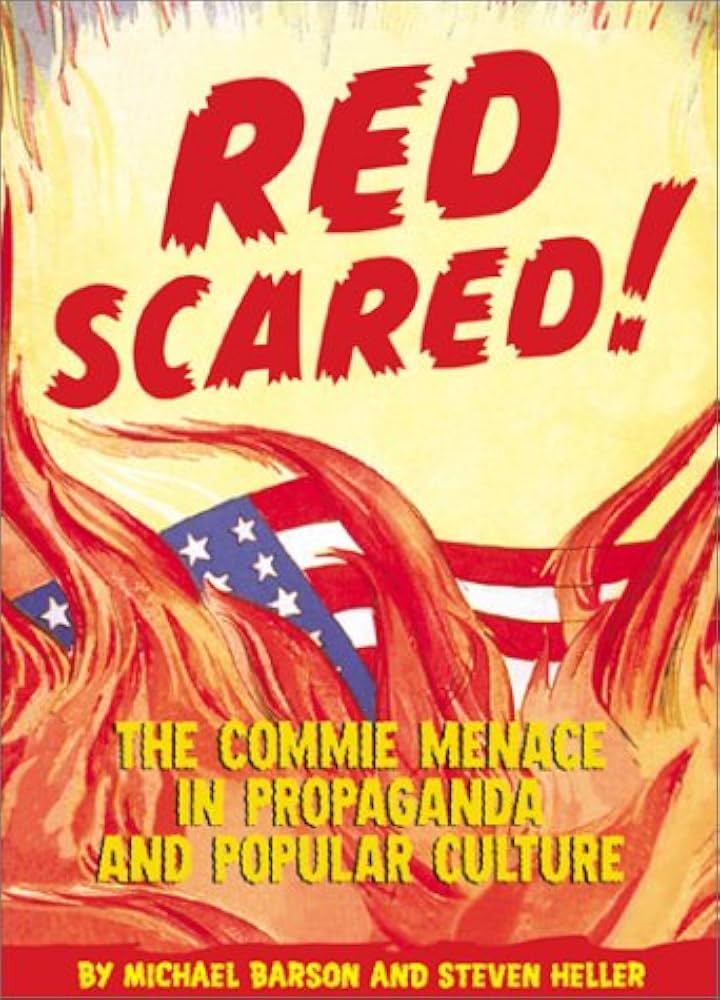
Russia has remained a primary villain of Western political mythology since the end of the Second World War. It is far easier to reduce an entire nation to a handful of labels than to understand its history. “The Evil Empire,” “Mordor,” “the Reds,” “the Commies,” “the Ruskies”—each becomes a convenient stereotype, a verbal box into which an entire people can be placed.
If we hope to build a more peaceful world, we must make the effort to understand how our so-called enemies see us. Peace cannot rest on caricatures or blind spots that reduce those on the other side to little more than embodiments of evil.
Sadly, NATO and the vast U.S. military-industrial lobby set the agenda, the media packages it in “newspeak”, and politicians dutifully repeat this mantra to a public that often has little time to question the narrative.
None of this negates the horror Ukrainians suffer from being a buffer state, the death of soldiers on both sides, or the economic hardships felt in other countries because of a war that could have been avoided in 2014 if the Minsk Accord had been implemented.



 conflict through a much wider historical and geopolitical lens than the one generally offered by our mainstream media. )