Home Blog Page 36

Phoenix Riting! – October 16th, 2025

It is Thanksgiving Day today. This holiday is always a bittersweet one to me, and not to the obvious reasons. It feels like a perfect day for contemplating the complications of gratitude.

The Thanksgiving story says that on this day we celebrate the shared harvest and our gratitude for the help we received from the original peoples of this land. But that begs so many questions. How have we repaid that help? How did we come to dwell upon this land while they have been pushed to the fringes we allowed them? Why do they so often have undrinkable water? Most importantly, how can we be grateful for something we stole in the first place? How must it feel to receive that kind of blind gratitude?

Is it okay to be grateful for the ways we benefit from the suffering of others? No. That doesn’t feel right. It triggers an uncomfortable cognitive dissonance. We need Truth and Reconciliation, and that takes time. I hope and trust that we are moving toward it as a collective, slowly and haltingly. 

But better to know uncomfortable history than to bask in ignorance. Me, I’d rather know too much than too little, and so I’ve made peace with a certain constant dissonance.

This dissonance extends to other things, too. I might feel grateful for a great bargain I found on a shiny new thing—yet deeply uncomfortable knowing that someone, somewhere, was likely paid less than their work was worth to create it. Balance is difficult to find in this technological, interwoven, webwork world. So many harms done, so few reparations made. How to feel uncomplicatedly grateful in this tangled mess?

For me, the key is to be fully located in the moment, in my skin, now. Things simplify. Gratitude narrows down. What’s most important comes into focus, here and now. It feels better to say ‘grateful to’ rather than grateful ‘for,’ for one thing.

I am grateful to my fingers tapping the keys of my laptop. I am grateful to my breath, the soft way it fills my chest and gently empties again. I am grateful to the delicate balance of muscles contracting and releasing, to the swift responsiveness of my nervous system. I am grateful to my vision, that I can see what’s before me so clearly now. 

I am grateful to the beauty my eyes can see everywhere. I am grateful to my flexible perception that lets me see beauty even in the mess and the ugly. I am grateful to music, the way it uplifts and unites. I am grateful to my mind that thinks in song. I am grateful to my ears, to the harmonious and cacophonous sounds that beat the drums within. I am grateful to my brain, the interface between my senses and my soul, through which I experience life as if it were real.

Zooming out a little: I am grateful to my mom, who birthed me and did her very best. I am grateful to my kids, their spouses, and their friends—who are the best people I know. I am grateful to my grandchildren and the shining potential of the future they promise. I am grateful to my sweet granddoggies who love me so much. I am grateful to my sweetheart and my friends, who make life so much better.

I am grateful to the kindness of humans on this island—the caring, sharing, and pulling together I see here. I am grateful to the new directions opening up this winter. I am grateful to the Songwriter Circle, which met for the first time on Friday and turned out exactly as I hoped. It promises music and laughter every Friday (7 p.m., at the Hornby Arts Centre) throughout the coming dark season.

I am grateful to the many offerings here, the classes and groups. I am especially grateful to the produce section at the Co-op, site of so many wonderful conversations. I am grateful to the familiar faces I see each day, to the smiles and hellos that lift me when I’m down. I am grateful to the delicious produce grown by local farmers, and the fruits of my own garden. I am grateful to the help and support I’ve received during that time. I am grateful to the amazing resources, volunteers, teachers, doctors, support staff, chiropractors, and physiotherapists we have here.

I am grateful to my life. I am grateful to you all. Most of all, I am grateful for your patience in reading this long list of gratitudes. Bless you all, and Happy Thanksgiving.

Thats what I think. What do you think? Email me at phoenixonhornby@gmail.com for feedback, and for more information about the Songwriter Circle that meets at 7 p.m. every Friday evening at the Hornby Arts Centre.

9 8 25 the old gladiator

9 8 25 the old gladiator

The

grizzled

old kick

boxer

bounces

into the

ring

well aware

of the tender

nature of his

swollen right

ankle

and there is

an internal

twang

gyrating up

his left leg

from the horrendous

rips in his untreated

meniscus

but he is here

to do battle

with a young

buck karate

instructor

and his old

redneck fans

are already 

drunk bellowing

his praise

while shoveling

hot dogs and

popcorn into

chinless gullets

and the kids

are indifferent 

to the old fart

but are here

to support 

their sensi

while one old

fan watches

the match on

cable TV 

in a corner 

of his small loft

sitting on

his old broken

cherry red

leather couch

obsessively 

munching packets

of South Korean

seaweed and rice

krispy snacks

sipping a can

of Canadian 

waiting with

tepid impatience

to see how the

old gladiator fairs

occasionally getting

up in his torn boxers

to shadow box

imaginary opponents

while trying not

to hit his head

on the low ceiling

or trip over the

coffee table.

Israeli Officials Are Openly Saying They Plan To Resume Attacks On Gaza

OCT 12, 2025

Listen to a reading of this article (reading by Tim Foley):

Israel’s top officials are openly declaring that they intend to terminate the Gaza ceasefire after they get their hostages back.

Defense Minister Israel Katz has posted a tweet in Hebrew which machine translates as follows:

“Israel’s great challenge after the phase of returning the hostages will be the destruction of all of Hamas’s terror tunnels in Gaza, directly by the IDF and through the international mechanism to be established under the leadership and supervision of the United States. This is the primary significance of implementing the agreed-upon principle of demilitarizing Gaza and neutralizing Hamas of its weapons. I have instructed the IDF to prepare for carrying out the mission.”

Hamas has not agreed to any demilitarization or destruction of its tunnels. There is no way to demilitarize Gaza and neutralize Hamas of its weapons against their will without continued warfare, something Israel has demonstrated it cannot do without killing shocking numbers of civilians.

Katz’s comments echo the public statements of Prime Minister Netanyahu, who said in a televised speech on Friday that “Hamas will be disarmed and Gaza will be demilitarized,” and that if Hamas doesn’t disarm voluntarily then “it will be achieved the hard way.”

In another statement Netanyahu said, “We have achieved tremendous victories but the campaign is not over; part of our enemies are trying to recover.”

Israeli outlet YNet reports that Israel is planning to resume its blockade and prevent reconstruction if all the bodies of the deceased captives are not returned, when Israel already knows that Hamas probably won’t be able to locate all the bodies of deceased Israeli captives due to the intensity of the Israeli bombing campaign over the last two years.

“If Hamas does not cooperate with the return process, and Israel suspects that it is deliberately hiding the bodies in order to preserve them as a bargaining chip, it is expected to impose a series of sanctions on it — including preventing the reconstruction of the Strip, the entry of caravans, the opening of bakeries and the entry of civilian equipment,” Ynet reports.

In a recent article titled “Israel assesses Hamas may not be able to return all remaining dead hostages,” CNN reports that “Sources say the Israeli government is aware that Hamas may not know the location of, or is unable to retrieve, the remains of some of the 28 remaining deceased hostages.”

As noted by Shaiel Ben-Ephraim, these two pieces of information would seem to indicate that Israel is planning to use the unreturned bodies as a pretext to break the ceasefire.

It is perhaps somewhat noteworthy that Israel’s open preparations to resume the onslaught in Gaza directly contradict the statements of the president of the United States.

Asked by the press about Netanyahu’s refusal to say that the “war” in Gaza is over, Trump forcefully stated, “The war is over. The war is over, okay? You understand that?”

Trump suggested (without stating outright) that he has received “verbal guarantees” from Israel that the violence will not resume.

So here we have Israeli officials openly and explicitly saying that the attacks on Gaza have not ended, and the US president saying that they have. It’s not often you see these two governments directly contradicting each other with mutually exclusive positions in ways that will necessarily be proven or disproven by the events which follow.

So I guess we’re about to find out who has ultimately been in charge of the Gaza genocide this whole time.

______________

Caitlin’s Newsletter is a reader-supported publication. To receive new posts and support my work, consider becoming a free or paid subscriber.

The best way to make sure you see everything I write is to get on my free mailing list. My work is entirely reader-supported, so if you enjoyed this piece here are some options where you can toss some money into my tip jar if you want to. Click here for links for my social media, books, merch, and audio/video versions of each article. All my work is free to bootleg and use in any way, shape or form; republish it, translate it, use it on merchandise; whatever you want. All works co-authored with my husband Tim Foley.

Bitcoin donations: 1Ac7PCQXoQoLA9Sh8fhAgiU3PHA2EX5Zm2

Feature image by Österreichisches Außenministerium via Wikimedia Commons(Attribution 2.0 Generic).

hair doos

#1705

Shucking Oysters: The Future is Far From Friendly

Google Data Factory Farm, Loudoun County, Virginia USA

Shucking Oysters: The Future is Far From Friendly

By Alex Allen

Data. It records our actions: what we read, what we watch, where we travel, what we purchase, what we write, what we search, and on. Far from being held in the clouds, our data is being held in data camps all around the world. Some can be millions of square feet in size, stretching across thousands of acres; others are hidden innocuously behind building façades in downtown metropolises. As cloud computing and AI increase the world’s demand for data storage, there are even bigger plans to build even bigger data warehouses globally. 

A data centre, Alexander Nazaryan wrote, is kin to a server centre, “the lymph node of the digital economy.” Typically windowless warehouses, they constantly process the ginormous amounts of data we use all day long. Much like industrial animal factory farms, these are industrial digital farms. Both need large amounts of floor space, both have high power requirements and both need ample water. Instead of the screeching of abused animals in distress one gets to hear the high-pitched buzzing of fans and cooling systems.

With his brazen lack of concern for the environment or life and his obsession with winning, Trump has big, big plans. In January, he announced “Project Stargate,” which he called “the largest AI infrastructure project in history.” The project, a $500 billion joint venture between OpenAI, Oracle, Japan-based SoftBank and Emirati investment firm MGX, is financing massive data farm construction across the US. 

As we well know, Trump has no boundaries. Beyond arable farmlands, pristine federal lands are also primed for big, beautiful data farms. “Obviously, we are not oblivious to the fact that data centers require energy, they require water,” a White House spokesman commiserated. “We understand those concerns. But there’s a cost-benefit analysis here.” Indeed. Everywhere data farms are being proposed (forced), communities are being told of the huge employment benefits. The reality is, once construction ends, a data farm may need only a dozen or so people to operate. 

In north Virginia, two years ago, the world’s largest data farm, Digital Gateway, was given the go-ahead, a 23-million square foot cluster fuck of 37 data farms on 2,100 acres of former farmland. Last August, a judge voided its rezoning due to, of all things, a public notice violation. Then in September, a county board appealed the ruling, citing that private investments could be “irreparably jeopardized.” 

“Halting this project disrupts critical momentum and raises serious concerns among investors.” We all know this mantra. It’s not about the environment, it’s about the almighty shareholder. If you’re against data farms, you’re against innovation and prosperity. Fun facts: the power requirements for the proposed Digital Gateway site, are estimated to be about the equivalent of the needs of 750,000 households. And water? As much as five million gallons of water a day (the usage of a community of 50,000 people). 

AI is worse. For every 50 questions it’s asked, ChatGPT needs 16-ounces of water. And according to the International Energy Agency (IEA), a single ChatGPT query requires 2.9 watt-hours of electricity, compared to a mere 0.3 watt-hours for a Google search. 

It’s a generative AI building boom. As Franklin Foer wrote, data is the new oil. Construction is planned in North America, South America, Europe, Asia, Africa and Australia. Rajiv Garg, a cloud computing professor at Emory University in Atlanta, says these data farms aren’t going away – if anything, they’re becoming the backbone of “modern” life. 

In January, Zuckerberg’s Meta opened a $1 billion data farm, that spreads over two-million square feet on 396 acres, in Mesa, Arizona. It doesn’t matter that the surrounding county, where Microsoft also has two data farms, is facing extreme drought. And it hasn’t stopped Google’s plans for a second center, while the first can use over five million cubic metres of water a year. 

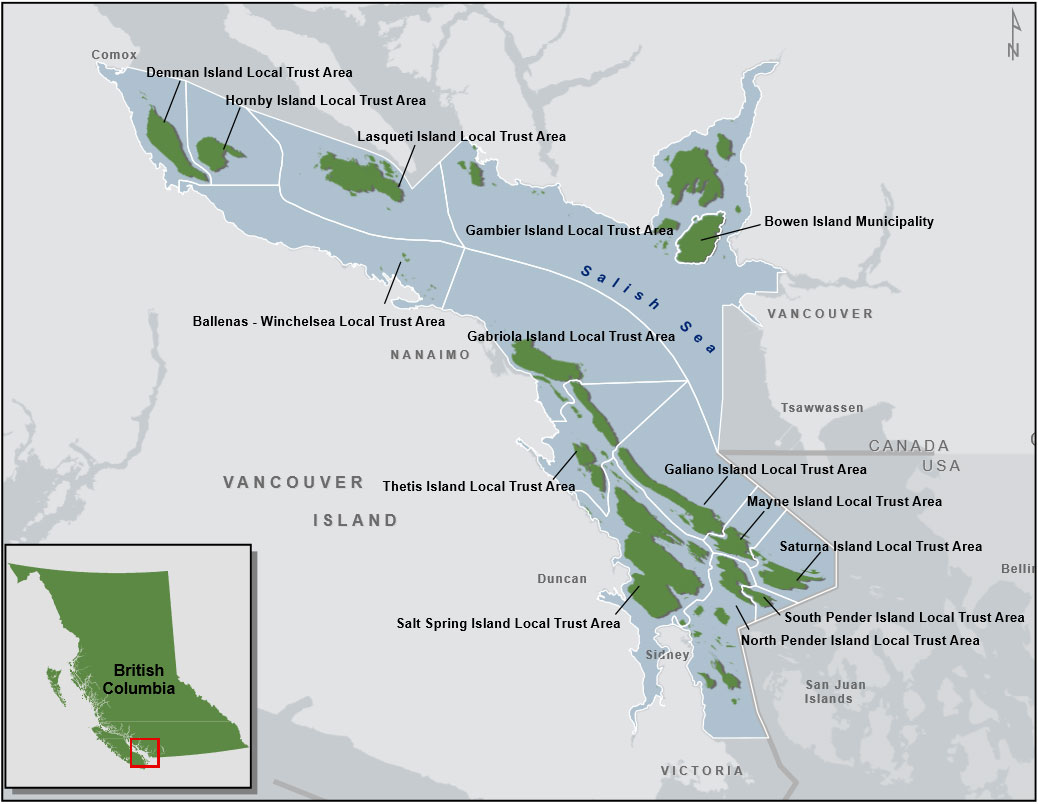
In Louisiana, Meta is currently building a four-million square foot, $10 billion complex data farm, dubbed “Hyperion,” on 2,250 acres of farmland (the size of both North and South Pender Islands combined), that could use the energy equivalent of four million homes. “We are making all these investments because we have conviction that super intelligence is going to improve every aspect of what we do,” Zuckerberg said in July. 

Touted as the largest construction site in North America, Delaney Nolan wrote, “this is rural Richland Parish, once a floodplain tangled with meandering bayous and wild canebrake where black bears still wander and a quarter of the 20,000 residents live below the poverty line.” 

There are over 5,000 data farms in the US, followed by Germany with 529, China 515, the UK 514, and Canada 336. With no surprise, soon to be the largest data farm in Canada, is a massive $70 billion AI complex in Alberta, driven by dragon/shark Kevin O’Leary, called Wonder Valley, stretching over 760,000 square feet. Premier Danielle Smith, who someone once described as having a “kind of bombast and defensive determination to keep doing the wrong thing,” has plans to blanket rural Alberta with $100 billion worth of data farms. Meanwhile in BC, Bell AI Fabric plans to build six AI data farms, with the altruistic aim of creating the largest Canadian AI infrastructure (for its shareholders). 

The IAE recently estimated that “the US economy is set to consume more electricity in 2030 for processing data than for manufacturing all energy-intensive goods combined, including aluminium, steel, cement and chemicals.” So it is with supreme irony, speaking at Italian Tech Week last week, that Jeff Bezos announced that he’s going to be building giant gigawatt data centers in space. 

“Because we have solar power there, 24/7. There are no clouds and no rain, no weather,” Bezos said. “We will be able to beat the cost of terrestrial data centers in space in the next couple of decades.”

Bezos assures us that the shift to “space infrastructure is part of a broader trend of using space to improve life on Earth” (after Big Tech destroyed it). “It already has happened with weather satellites. It has already happened with communication satellites. The next step is going to be data centers and then other kinds of manufacturing,” Bezos enthused.

As Andrew Nikiforuk in The Tyee, eloquently put it: “Let’s be clear about what we are doing here. We are using lakes of clean water, reviving coal-powered stations, gulping methane, raising electrical prices, squandering agricultural land and cannibalizing electrical supplies to ask inane questions and make videos about stupid shit.” 

Phoenix Riting! – October 9th, 2025

Hello, dear Islands.

We’ve survived another summer, and look at the glorious sunshine out there now. This is the kind of weather that makes you want to talk about the weather to everyone you see.
“Beautiful day!”
“It is!”

It’s not hard to feel positive when the sun shines low and golden on an autumn afternoon. This is where we should orient ourselves, here and now, to take stock on this Aries Full Moon on the eve of the apocalypse, to gain a little perspective. This is what we have, now. Who knows how long it will last?

I’ve had a long summer to do not much else but think. I think we should write a song.

A song can change the world. Not every song does, but a song can change you. Singing a song you made yourself can rewire your brain, and singing it can spread the virus around. Music, married with story and poetry, adds up to magic, the real sort of vibrational magic that works through the laws of harmony, melody, synchronicity, meaning and rhyme. Songs are spells.

Of course, a song doesn’t have to be revolutionary or deep. It can be lighthearted and sweet, or ironic and satirical, or tell a funny story. A song can be silly. No two people will ever come up with the same one. Songs are a good thing.

Even songs of pain, suffering, trauma, and oppression add up to harmony. They set us free, transform our reality. Songs of heartbreak can heal our hearts; songs of anger can motivate us to change what’s wrong in our lives. This is true whether we write the songs or not. Songs soundtrack revolutions, but how much more powerful can it be when the songs come from our own souls?

If you’ve ever written a song (or would like to) there’s a space opening on Fridays at the Hornby Arts Centre at 7 p.m. Every songmaker is welcome! Let’s spread the news in music and maybe even change the world with songs and magic. We don’t need the internet, or radio waves, or even to be heard outside the room. It’s about shifting the vibe—opening spaces between our cells and selves.

So that’s what. I’ve had a lot to think, and I’m full up.

I think all government is corrupt, because they are all subject to forces: lobbyists, corporate interests, foreign interference, hidden powers behind the scenes, the temptations of wealth and power, the struggle and compromise it takes to get to the top, it all corrupts. Right wing? Left wing? Who cares, the poor old bird is dying. Governments are starting to split at the seams. It could all fall down unexpectedly quickly. These are chaotic times.

Our hope doesn’t lie in trying to change governments. It’s too late for that; it’s been tried and failed over and over. It’s time to keep our feet on the ground, to develop and nurture relationships within and between our local communities. Grow the next new thing from the ground up.

We do have to obey rules imposed from above, bureaucratically tone-deaf and inapplicable to our local situations, and that’s frustrating for those who have to deal with bureaucracy. In my opinion, the most important work we can do is strengthen our internal affairs: develop inter-community connections and neighbourhood relationships.

Gather in groups through the winter. Get to know each other. Share vulnerable stories. Sing together. Dance together. Learn the stories behind the familiar faces. It’s amazing how shallow our relationships have become with the advent of the internet. We spend so much energy talking to people who, if the machine ever stops, we may never hear from again.

I don’t mean to be a doom crier, but I grew up on sci-fi tales with titles like The Machine Stops, about the dangers of extreme dependence on technologies that could shut down in a moment, for reasons we can’t even anticipate. An extreme solar storm. Terrorist attacks on infrastructure. Climate change. Running out of energy to sustain the grid. So many things could go wrong.

The heroes are the folks who grow the food right here. And it isn’t enough, but if it all goes to fluff, I don’t think it would take long for us to pull together and do what needs to be done. We’re very blessed to live here, with a friendly climate and a co-operative, supportive community.

I suppose I’m thinking apocalyptically. It’s easy to do right now. After all, we just had the Rapture. And apparently, American cities are turning into war-torn hellscapes requiring military intervention. Yeah. Weird, weird times.

Just kidding. The Rapture didn’t really happen. Did it?
Is anyone missing?

That’s what I think. What do you think? Email me at phoenixonhornby@gmail.com

And we, the observers, watch them. We watch them trying to maintain the fiction of their old lives.

Gabriel Jeroschewitz, August 2nd, 2025     

And we, the observers, watch them. We watch them trying to maintain the fiction of their old lives.

We do not see the girl. We see the photograph, a brittle, sepia-toned ghost captured in 1915. We know the ghost is making a face. She has pulled her lips back to reveal a set of impossibly large, fake teeth, a cheap novelty item that must have felt wonderfully scandalous in the hermetic, gilded world of the Alexander Palace. Her eyes, dark pools of light, are crinkled with a joy so pure and unthinking it feels like a form of blasphemy from our vantage point, a century later. This is Anastasia Nikolaevna Romanov. Or rather, this is the first vessel for her memory. A girl playing a fool, unaware that the universe is preparing a joke of its own, one with a punchline delivered in a dusty basement.

The horror is not in the image itself. The horror is in the system surrounding it, the invisible machinery of fate clicking into place just outside the frame. In that moment, she is trapped, not by revolutionaries, but by something far more insidious: the unyielding pressure of her existence. She is a Grand Duchess, a cog in an ancient, ornate apparatus of bloodline and divine right. Her laughter is a state-approved commodity. Her future is a pre-written ledger of diplomatic marriages and ceremonial duties. The fake teeth are a tiny, momentary rebellion against the crushing decorum, a brief, absurd gesture that says, I am here. I am a person, not just a title.

It is a protest that no one, least of all her, understood the weight of. It was simply a silly thing to do. Her sisters, Olga, Tatiana, and Maria, likely giggled. Her brother Alexei, frail and cherished, might have managed a weak smile. Her parents, the Tsar and Tsarina, would have seen it as another instance of their shpion—their little imp—being herself. They were all trapped in the same room, in the same palace, in the same story. A family portrait so suffocatingly perfect it was bound to crack.

And then, the system changed. The ornate, gilded cage was replaced by a plainer, more brutal one. The Revolution did not free them; it merely transferred them from one form of imprisonment to another—from the Alexander Palace to the Governor’s Mansion in Tobolsk and then to the Ipatiev House in Ekaterinburg—the House of Special Purpose. The name is a Kafkaesque masterpiece of bureaucratic dread—a place designated for a terrible function that could not be named outright.

In this new system, the rules were inverted. Their titles became curses. Their refinement was a mark of guilt. Their helplessness was the entire point. They were no longer symbols of power, but specimens of a bygone era, preserved under armed guard for a final, forensic examination. One can imagine Anastasia in those months, the impish light in her eyes dimming, not with fear, perhaps, but with a profound and bewildering confusion. The world had ceased to make sense. Why were the soldiers so angry? Why was the food so meagre? Why could they no longer walk in the garden without being watched? The questions were met with a blank, unyielding silence. The logic of their situation was as alien and nonsensical as a trial for a crime one was never told they committed.

And we, the observers, watch them. We watch them trying to maintain the fiction of their old lives. The Tsarina teaching her daughters to sew jewels into their corsets, a desperate, pathetic act of faith in a future that would never arrive. It was an act of profound absurdity, sewing diamonds into their undergarments as if they were smuggling not wealth, but their very identities, past an unseen checkpoint. They were preparing for an escape, but the only escape available was into myth.

The final night is the quietest nightmare of all. They are woken and told to dress. There is unrest in the town, they are told. They must be moved to the basement for their safety. It is a lie, of course, but it is a systematic, procedural lie. It has the hollow ring of officialdom. Down the stairs they go, a small, sleepy procession into the earth. The Tsar carries his son. The Tsarina and her daughters carry pillows, their dogs, and the secret weight of their diamonds.

In the bare room, they are arranged as if for another photograph. And for a moment, there is only the waiting. The silence is thick with unspoken questions. What happens now? It is the ultimate expression of their powerlessness. They are characters in a play who have been led onto a dark stage, awaiting a final line they will never get to speak.

Then, a man steps forward and reads from a piece of paper. The words are bureaucratic, cold—a verdict from a system that has condemned them. The ensuing chaos is not the clean stroke of an executioner’s axe, but a clumsy, horrifying mess—the cacophony of gunfire in the small space, the ricochets, the screams. The jewels sewn into the corsets are doing their one, final, absurd trick: deflecting the bullets, prolonging the agony. The system is malfunctioning, a brief, frantic struggle before its terrible purpose is fulfilled.

And in that noise, the girl with the fake teeth disappears.

But the story does not end there. The horror mutates. Anastasia is not allowed the dignity of a simple, tragic end. The desperate need for a fairytale resurrects her. The system of history ejects her from the basement and traps her in a new role: the lost princess, the survivor, the ghost who might still be out there. Women with haunted eyes and half-remembered stories step forward, claiming to be her. Anna Anderson became the most famous vessel for the world’s collective wish. She has forced the world to look, wonder, and hope for decades.

This is the second, more profound horror. Her identity, which she asserted with that silly face, is now a commodity. It is debated in courtrooms, romanticized in animated films with talking bats, and sold as a story of hope and resilience. The real girl—the one who loved jokes and dogs, who was trapped and confused and ultimately murdered in a cellar—is erased. She has become public property, an indifferent machinery of the world.

When the science finally arrives, it is as cold and impersonal as the verdict read in the basement. DNA analysis. A confirmation of bone fragments. The file is closed. The rumour is put to rest. Anastasia Romanov did not survive.

We are left, then, only with the photograph. The girl with the fake teeth. It no longer looks like a moment of joy. It looks like a mask. A frantic, silent scream of identity from a girl about to be swallowed by systems—royalty, revolution, history, and finally, by our own stories. We look at her, and she looks back, not at us, but through us. Her playful gesture has become a grimace, a reflection of the absurdity we all feel when confronted by the world’s vast, silent, and utterly senseless machinations. We feel exposed. And in that exposure, we recognize the hollow space where a person used to be.

8 21 25 I have swum

8 21 25 I have swum

Recently

I have swum

in the cold 

dark atlantic

off of Brier Island,

Nova Scotia

and shortly

thereafter I threw 

myself off of reddish

sand into the turbulent

Bay of Fundy

and in New Brunswick

I let the Restigouche River

push my bulk down

a serpentine path

and later still I swirled

majestically in the old

quarry waters of Lac

Crystal, Quebec

and from there it was

onto mighty Lake Superior

where I floated wildly

above its infinite glossy

pink stones

and in Winnipeg

I dove into a hotel pool

swimming with an

enormous fat man

who enjoyed sliding

upside down through 

the winding kiddies 

tunnel that spat 

him into the pool

like an enormous 

ball of phlegm

and I didn’t swim again

until I hit the Okanagan Lake

which was divine in its

inviting tepidity 

and when I got home

to Denman Island

I bounded down into the blue

pacific tossing linens

like an old stripper

across the oyster beds

in nothing more than

my modern loin cloth

hurling myself into 

the frothy salt chuck

head first while

swinging deep with

my overhand stroke

only to find it was 

the coldest of all

which is good

for oysters,

gooey ducks

and people

who really like to

swim like 

me.