
June 8th Pizza Fundraiser
Dear lovely folks of Denman,
It has come to our attention that there are a couple of children who are very eager to participate in the upcoming Wildhaven Camp this summer, but due to financial barriers cannot do so. To us it feels unnecessary that just a couple of kids who want to participate in this wonderful community driven camp should not be able to… so we are doing a fundraiser! And to make it even more exciting we are doing a PIZZA fundraiser! Over the years we have been so grateful to this community for all your support to our family, and we are happy to have an opportunity to do the same for more families on Denman. Please note that this year we are fundraising for a specific family, but hopefully in the future this is something we could offer as a scholarship option for more families (depends how much pizza you all want to eat!!).

Mark your calendars:
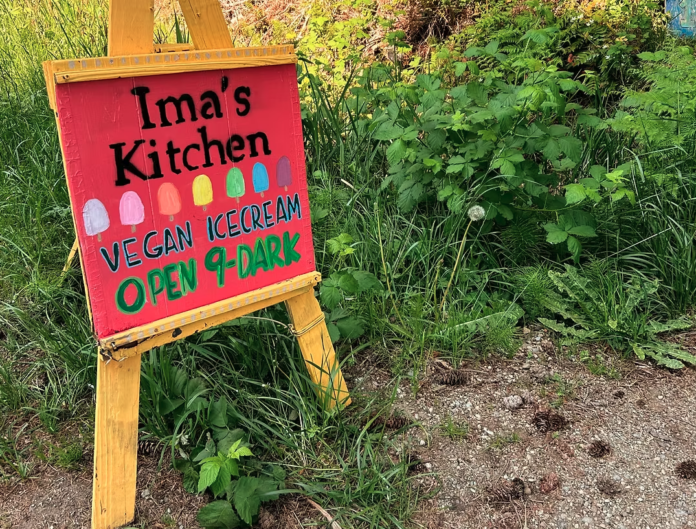
June 8th Pizza Fundraiser at Ima’s Kitchen
All proceeds from the pizza sales will go towards the tuition fees of 1-2 Denman kids at Wildhaven Camp.

Check out our post on Facebook for the menu, and give us a call anytime the week before to place your order: 250-650-8037
Thank you! From our family at Ima’s Kitchen
FOMO
FOMO
The residents of Cowichan Valley recently demonstrated that the PEOPLE STILL HAVE A VOICE.
https://www.youtube.com/watch?v=zm68OLvtNA0
Hi Folks,
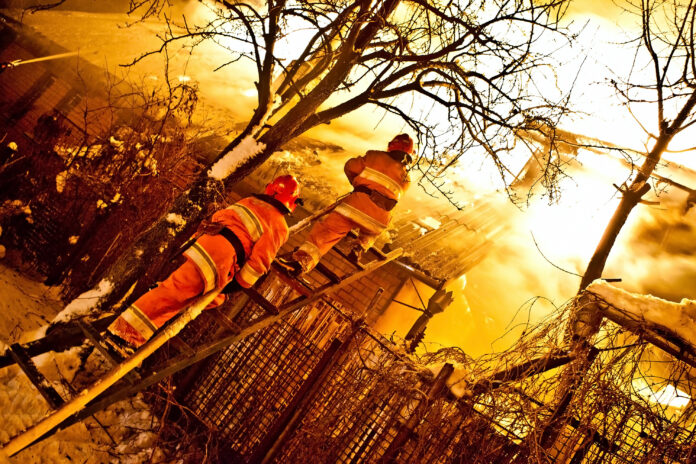
There is nothing to Fear and there is nothing to Miss Out on, contrary to CVRD’s latest FOMO (Fear Of Missing Out) campaign.
Again, thanx to the taxpayers, home owners and residents (both in and outside of the Graham Lake subdivision) who remain interested, concerned and continue to offer input and ask questions about the cavalier handling by the CVRD on the water treatment solution and egregious fire water situation. A bigger debt doesn’t mean a better solution.
It is time to vote “No” to the ongoing CVRD slop that continues to be served up to the subdivision community.
Why?
Lets crunch numbers:
$2,000 Project Debt Service Cost
$1,000 CVRD Tolls
$1,000 Water Tax
Leads to a $4,000 minimum PER YEAR WATER BILL AND LONG TERM FINANCIAL HARDSHIP WITH NO SUBDIVISION FIRE PROTECTION AND MORE. This is a galaxy far away from the promised “All Free Today” water upgrade and $1,000 per year water bill.
As one fellow subdivision resident put it, “Hard to say yes to anything when I have no idea on the project and what that encompasses”. So true. Another resident wasn’t surprised and stated, “CVRD is self quoting and self managing projects with a we know everything attitude”. Un-conflicted 3rd party water and Fire Specialists need to be consulted. A Steering Committee needs to be in place (BEFOREHAND) to prevent the signing of a blank cheque to the CVRD on a multi-million dollar open upgrade that still lacks demonstrable research, scope, budget, tendering processes, options and clear purpose. FOMO does not add value. By definition this is a boondoggle, not a project.
So why does CVRD constantly have a difficult time presenting information in a coherent and truthful package? It appears CVRD hasn’t done their homework or due diligence which is just not minimal perfunctory requirements This is not about sending CVRD back to the drawing board, it’s about CVRD actually going to the drawing board. See previous Grapevine article: “Quantum of Solace GLID”. Squandered engineering time and weak assessments mean expensive shortcuts, especially when egos, agendas and narratives are at stake. This is an unnecessary and outrageous predicament that the subdivision residents have been placed in and now we the taxpayers are expected to pay the way out of this incompetence.
Still not convinced to vote NO?
The rumoured water treatment is a convenient, no in-depth engineering required, one size fits all, of the most expensive kind. Cost effective treatment options are available.
The rumoured water treatment involves trucking off island natural organic byproducts for eternity at significant operational cost forever and the importing of new treatment material. Do these actions satisfy the island’s Official Community Plan (OCP)?
Water Meters are to be installed? This is already a failed CVRD business and operational model tried in Parnell. There is no significant eco-green or operational benefit. This nonsense serves no other purpose than increasing upgrade costs as it is not associated with Surface Water Treatment Objectives (SWTO) compliance.
By analogy; So far the only reason I’ve been told to vote “yes” is to prevent a $10 coupon from expiring on a $50 hamburger of non-descript. I’m not convinced and neither should any other concerned subdivision resident be.
Operational Fire Hydrants are an integral component of any subdivision water system. They are not a luxury car trim option. Fire Hydrants are required by the CVRD for all subdivisions. This is also consistent with BC Provincial requirements.
Vote “YES” on Fire Hydrants for your safety and property.
Still not convinced?
Superior Tanker Shuttle accreditation is an awesome alternative system to protect a single rural structure on fire, one incident at a time. Box checked. Fully Support!
SUPERIOR TANKER SHUTTLE IS NOT DESIGNED FOR SUBDIVISIONS (LIKE GRAHAM LAKE). CVRD representative Bruce Green has yet to answer and clarify the numerous questions from subdivision residents and 3rd party Fire Specialists on this very concerning issue. AND YES THE TITANIC HAD LIFEBOATS BUT WHY WASNT EVERYONE SAVED?
There is no guarantee that an Interface subdivision fire will be covered by fire insurance as many around the globe are finding out. A saving subdivision property approach results in best outcomes for everyone. Firesmart equipment can help.
CVRD’s $500k Fire Hydrant reactivation cost is obscene. CVRD has yet to break out cost to 3rd party Fire Specialists in the industry. A FREE 63 million gallon storage tank is available, it’s called Graham Lake. Was that included in the budget? Who authorized the removal of the Graham Lake Emergency By-Pass in the Pumphouse?
Firesmart equipment is available at Costco and can properly function off an operational Fire Hydrant water system, not the current or proposed system.
A Fire Hydrant Fire Protection feature is better value for buying and selling of subdivision property, than fire insurance. The fire victims in Los Angeles, Lahaina, Fort Mac, Lytton, Kelowna appear to agree.
The Parnell residents have an existing buried Fire Standpipe available which has been tested by the Fire Department. All it needs is operational Fire Hydrants. Just the water tanks at Bill Mee are not adequate.
When the significant subdivision fire occurs, enough fire protection best practice, codes, standards, regulations, by-laws have been intentionally disregarded opening the door to legal liability and criminal investigation. Ironically, this action will probably be led by the insurance companies. I recommend keeping this article in your fire safe with your insurance documents.
Ask your elected CVRD Denman Island representative Daniel Arbour; Why are facts and dialogue so difficult to engage in with the CVRD? The last two recent CVRD community interactions were a useless, shameful farce and a waste of time.
FOMO rarely leads to responsible project and financial planning.
Whether you decide on a “Yes” or “No” vote, a Steering Committee is a must.
There is no next time.
Best wishes and may your god be with you.
Have a good summer!
Shucking Oysters: Turn Hard Right
Shucking Oysters: Turn Hard Right
By Alex Allen
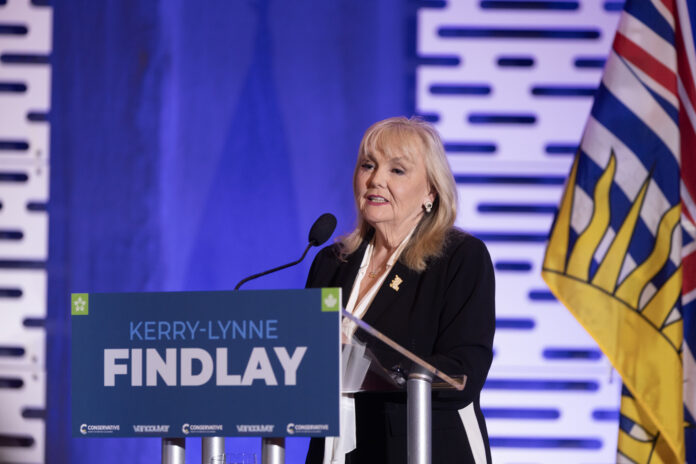
For some reason Canada always has to follow the lead of the United States on everything. Take the Conservatives (will you please?). Their ideologies and mean-spirited beliefs are no different from the Republicans and yet so many Canadians are embracing their whole agenda. And now, the bumbling BC Conservatives have elected yet another questionable leader: Kerry-Lynne Findlay.
Findlay, 71-years-old (next provincial election she’ll be 73), has extensive experience in federal Conservative politics. Having been an MP from 2011 to 2015, and again from 2019 and 2025, she served under both Prime Minister Stephen Harper and Pierre Poilievre’s cabinet, revealing her fondness for “establishment conservatism.” Accusations of racism and corruption against Findlay only reinforced her anti-establishment narrative. Opposing Indigenous rights and ending sexual orientation and gender identity were a few of her party platforms.
A leader who wins 51% of the vote is not exactly the favourite nor in full command. Leadership races rarely unite political parties. More often, they deepen divisions. So, as Findlay’s focus shifts to defeating Premier David Eby and the NDP, “her most immediate mission remains an internal one: uniting a diverse Conservative Party of BC bruised from an acrimonious leadership contest,” The Tyee reported.
Now Findlay needs to find an MLA willing to surrender his or her seat. With 31 of the Conservatives’ 38 MLAs serving their first term, it is unlikely that anyone will give up their coveted seat. An obvious solution is her equally controversial hubby, Surrey South MLA Brent Chapman, who has a history of posting Islamophobic and racist content, among other things.
David Eby’s BC NDP is very vulnerable right now. Cost of living, health care, housing, public safety and major infrastructure delays has made many British Columbians frustrated and angry. The perfect storm for the Conservatives.
Kirk LaPointe wrote that “the Conservative caucus is a political mashup of former BC Liberals, new conservatives, regional voices, populists, social conservatives, fiscal conservatives and rookies who arrived in Victoria on a sudden wave they may yet not appreciate.”
And then those outliers that left the party. Will Findlay reopen the door to more controversial individuals? Peace River North MLA Jordan Kealy, Kelowna-Lake Country-Coldstream MLA Tara Armstrong, and the sweet and lovely Vancouver-Quilchena MLA Dallas Brodie?
“We can be a powerhouse in our nation, a powerhouse no longer denied by eastern and global elites, predatory foreign nations and our own Constitution,” Findlay said in her acceptance speech. The Constitution? Where is she going with that?
Jennifer Whiteside, the BC NDP’s minister of labour, told reporters that Findlay had run a campaign based on “division and racism.” “I think with this result the pro-Trump, extreme-right part of the party is firmly in control,” Whiteside said. “She made comments about her colleagues that were racist in nature; she called out her fellow MLA Peter Milobar because his wife is Indigenous.”
Hey, it’s all good. Right?
The world is in a mess and much of it has been caused by Lord Rump and his reckless destruction of everything previously normal. Yes, the NDP are somewhat hapless and feckless in their traditional role of “impotent power.” And as someone so eloquently wrote in a comments section, the “Danielle Smith’s and K-L Findlay’s are just MORE Trumps-in-drag helping the great Orange ANTICHRIST destroy things. It would be good to have a “nice” NDP government that had some vision and brains to go along with “nice” but swapping out the sheep for the demented wolves is NOT an answer.”
The concern is that we BC voters do not have many options. Don’t like Eby? Vote for Findlay. Don’t like either of the above? Vote for the Greens. Findlay’s party slogan: “Faith, family and freedom.” The three F’s. Anyone here up to adding a fourth?
The Book Report
The Book Report by A Bae Hel
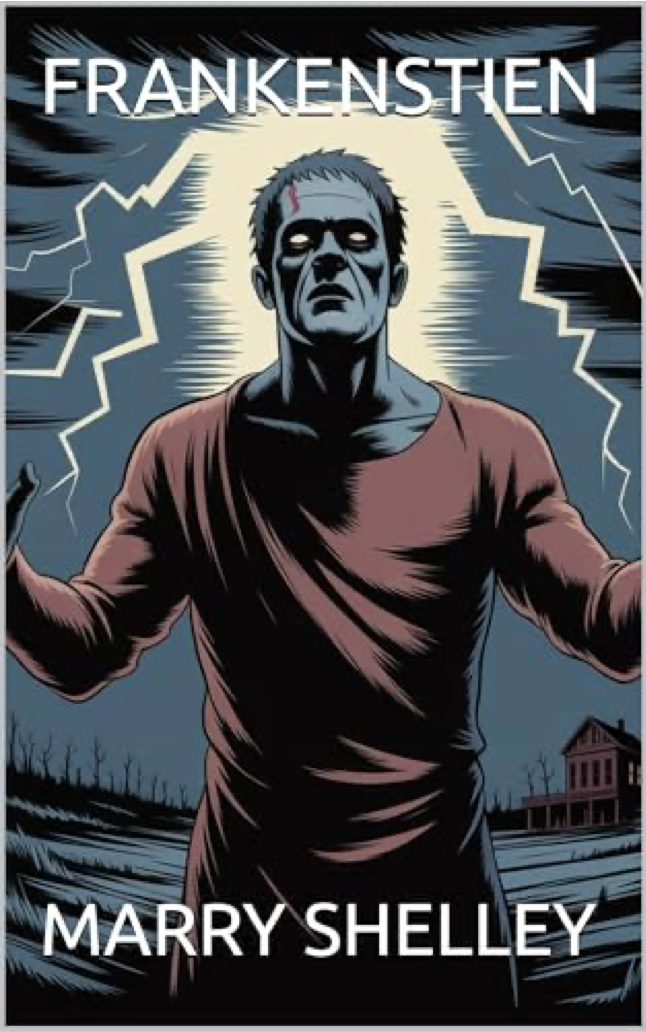
Frankenstein
By Mary Shelley
I acknowledge never having read this gem before now. In my defense, I have never been a big fan of horror, unless it is Poe, and if your book is marketed as horror, I will likely have missed it.
I see the error of my ways now. What other delights have I missed out on?
I think Mary Shelley saw the men of her time as objects of ridicule and hubris. She certainly writes it that way. The main characters, Frankenstein, the monster and Walton, are all men overly impressed with their ability to think and over reaching ambition. The female characters do not pass the Bechdel test, portrayed as passive hosts waiting for fulfillment through male agency.
She has taken the power of women, to create life, and placed it in the hands of a man, overburdened with the patriarchal values of ambition and self-centeredness, who takes a male approach to creation with all it’s lack of awareness or responsibility. Victor’s failure to provide the absolute basic necessities to his creation is the cause of all the pain and suffering that ensues.
And ensue it does. These characters are perhaps the original emo boys for they do seemingly love to suffer. The monster just wants to be loved, as all children, unfortunately, he has decided to take on the values that we see currently playing out in the dark corners of the internet – love me or I will destroy all you care about. Give me a woman who will dote on me. Tiresome now, and I bet it was tiresome then.
Frankenstein and his foil, Walton are hell bent on achieving fame until their hubris brings about their failing. Even then Frankenstein remains assured of his mission and Walton is easily swayed by words basically telling him to not be such a beta cluck.
Mary Shelley led and interesting life for the times. A child of passionate feminists and a wild child of the times she traipsed around Europe in the thrall of a self-centered man. I think she understood the assignment very well.
Absolutely do not miss reading this like I did. It is never too late
The Oystercatcher, A Review
The Oystercatcher, A Review
by Cylon2036. We/Us
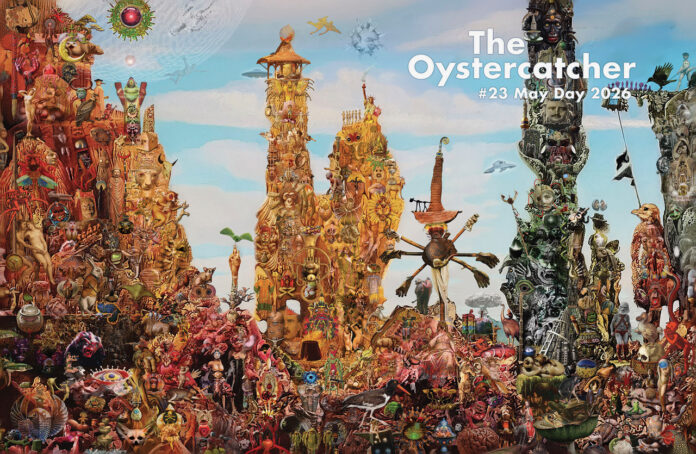
Published annually each May Day from Denman Island, and shared internationally, The Oystercatcher is a defiantly unclassifiable anarchist-surrealist periodical curated and compiled by Ron Sakolsky and Sheila Nopper. Part literary journal, part political broadside, and part dream-log from the fringes of late stage capitalism, the magazine blends poetry, essays, visual art, correspondence, and experimental prose into a singularly unruly offering first published in 2004.
Deeply informed by anarchism, surrealism, pirate radio culture, anti-fascist solidarity, and unconstrained imagination, The Oystercatcher occupies an unceded cultural territory far outside the polite boundaries of mainstream literary publishing. Its pages drift between ecstatic reverie and fierce political critique, often treating rebellion not simply as ideology, but as a lived aesthetic practice. The publication’s sensibility reflects Sakolsky’s long engagement with anarchist theory, free radio, and radical cultural resistance, alongside Nopper’s involvement in alternative broadcasting, art, poetry, and radical underground media.
Surrealism originated in Paris in 1924, led by French poet Andre Breton, drawing on 20th Century theories of dreams and human desires, as a literary and art movement of “pure psychic automatism”, bypassing conscious control, and treating dreams as portals into hidden “super realities.” With the rise of fascism in Europe, surrealists became more focused on active political resistance to war, seeking to dismantle the political and cultural structures that fuel nationalism, imperialism, and colonialism. Surrealists continue to argue that it is the “rational” values of capitalist society that cause the violent conflicts and wars.
A review in the anarchist publication Fifth Estate described The Oystercatcher as evoking “a Lost Utopia,” praising its atmosphere of fleeting radical possibility and imaginative escape. Rather than offering rigid doctrine, The Oystercatcher embraces contradiction, spontaneity, poetic disorientation, and what the surrealists call “the marvellous.” It ruptures the deadening routines of contemporary life through imagination and revolt, while rejecting “miserabilism”; the joyless belief that corrupt capitalist democracy is the “lesser of evils” in structuring our communities.
Physically modest, and beautifully printed, The Oystercatcher has the feel of a hand-crafted artifact from an enduring underground tradition that is part artistic intervention, and part signal flare from the margins. In an increasingly homogenized media culture, it remains a rare example of a publication devoted not to branding, careerism, or literary fashion, but to radical curiosity and uncompromising creative freedom in resistance to the poverty of imagination.
Issue #23 of The Oystercatcher is available now through the unconscious psychic portals into the unceded territory of dreams.
It wasn’t a moth
Gabriel Jeroschewitz, April 17th, 2026,
It wasn’t a moth.
The rain upon the windowpane of the third-floor office was a steady, rhythmic percussion, a gray clock signalling the slow passage of a dull Tuesday afternoon. Dr. Aris Thorn sat behind his mahogany desk, the fragrance of vintage paper and Earl Grey tea drifting in the air. He was listening to his patient, Elara, speak of a recurring dream, but his attention was drifting toward the window, where a storm was gathering strength.
Elara’s voice was soft, trembling gently as she narrated the imagery that had plagued her sleep for the past week.
“It was a bird,” she said, her fingers twisting the hem of her pullover. “Not just any bird. A crow. But it was heavy, Aris. It felt like it was made of lead. It sat on the roof of my youth residence, and it wouldn’t fly away. It just watched the front door with one glassy eye.”
Aris nodded, making a note on his pad. Bird. Weight. Omen.
“And when you woke up?” he inquired softly.
“I experienced a crushing feeling of fear,” Elara admitted. “Like the air had been sucked out of the room. And then, yesterday, I saw it.”
“Saw the crow?”
“No. I saw the omen,” she corrected, her eyes growing wide. “I was walking past the antique shop on 4th Street, and in the window display, there was a taxidermied crow, exactly like the one in my dream. It was posed on a branch, but the glass eye… it was the same. I hesitated on the sidewalk. I couldn’t breathe.”
Aris leaned back in his chair. He was a man of science, of cause and effect, yet he had read Jung. He knew the concept of synchronicity—that acausal connecting principle. He knew that sometimes the universe did not move in straight lines but in loops, folding over itself in deliberate coincidences.
“That is a powerful image, Elara,” Aris said. “Jung might say your unconscious was preparing you for a confrontation with mortality or a crucial transition.”
“But it felt like a warning,” she uttered quietly.
As Elara herself spoke, Aris found his gaze drawn back to the window. A small, dark shape was fluttering against the glass. A moth, perhaps, or a fly seeking shelter from the rain. It knocked rhythmically, a tiny percussion against the pane.
“Transitions are often frightening,” Aris replied, trying to refocus. “The scarab beetle, for instance, in Jung’s famous case—a symbol of rebirth, yet appearing literally in the room at the exact moment the patient described it.”
Elara shivered. “Do you think the universe sends signs?”
“I think,” Aris said deliberately, “that the unconscious is vast. It perceives things outside our linear perception of time. Sometimes, a thought matches an event, and the coincidence creates meaning.”
The tapping at the window became louder. Tap. Tap. Tap.
Aris finally turned his head fully toward the glass. The rain had obscured the view, but through a clear streak where the water ran down, he saw the creature clearly.
It wasn’t a moth.
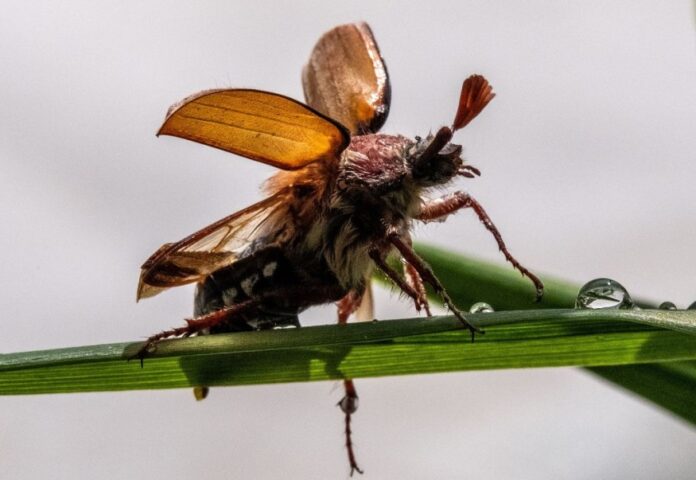
It was a beetle. Large, iridescent, its shell shimmering with an oil-slick sheen of green and purple against the dull gray afternoon. It was pressing hard against the glass, trying to push through the invisible barrier into the warm feeling of the office.
Aris perceived a sudden, sharp intake of breath.
He had been reading Jung’s essay on synchronicity just that morning, specifically the passage about the scarab beetle—the symbol of transformation that had appeared at the very moment his patient was describing her dream of the same creature.
And here was a beetle, not a scarab specifically, but the archetype was the same: a hard-shelled creature seeking entry, seeking transformation from the larva of the moist ground to the winged adult.
“Dr. Thorne?”
Elara’s voice pulled him back. She was looking at him, then following his gaze to the window.
“Oh,” she said, her voice softening to a soft tone. “A beetle.”
“Yes,” Aris said, his heart beating against his ribs. “It seems the universe is insisting on the theme of transformation today.”
He stood up and walked to the window. The beetle was persistent, its legs scrabbling against the glass. Aris unlocked the latch and slid the window open an inch—the sound of the rain rushed in—cold, fresh, and smelling of ozone. The beetle tumbled over the sill and onto the oak floorboards of the office.
It righted itself instantly, its antennae vibrating as it explored this new territory.
Aris crouched down, watching it. It was advancing with intent, a tiny, armoured tank crossing the rug’s landscape.
“It’s not a scarab,” Aris murmured, half to himself, half to the memory of Jung. “But the timing…”
He looked at Elara. She was staring at the beetle, her fear momentarily replaced by curiosity.
“It’s strange,” she uttered softly. “I was terrified of the crow, the heavy bird. But this… this feels different. It’s not heavy. It’s… persistent.”
Aris watched the beetle pause near the leg of his desk. It was an entity of the earth, emerging into the air, seeking the light of the window.
“Jung believed that when an unconscious image rises to the surface,” Aris said, standing up slowly, “and coincides with an objective event, it’s a message. A bridge between the psyche and the physical world.”
He motioned to the beetle. “You referred to a transition. Of a heavy bird that couldn’t fly. And here, a creature that can fly—or at least, has wings underneath its shell—arrives at the exact moment you describe your fear.”
Elara viewed from the beetle to Aris. “So, the crow was the fear of the transition, and the beetle…?”
“The beetle is the transition itself,” Aris suggested. “Hard armour protecting soft wings. Moving from the dark earth to the open air.”
The beetle reached the center of the room and stopped. It seemed to orient itself, its head turning as if surveying the space. Then, with a sudden, audible buzz, it extended its wing cases. Underneath, delicate, membranous wings vibrated, lifting the heavy body from the floor.
It circled once, a lazy, spiralling ascent, passing between the two humans, a mute observer in the therapy room. It flew directly toward the open window, maneuvering the air currents with invisible precision.
It didn’t hesitate. It flew out into the rain, disappearing into the gray mist.
Aris stood near the window, watching the vacant spot where the beetle had been. The rain was slowing, the light shifting as the storm moved east.
He turned back towards Elara. The apprehension that had knotted her shoulders seemed to have loosened. She was sitting upright, her hands resting palms-down on her knees.
“I don’t feel the weight anymore,” she uttered softly, a look of wonder on her face. “The crow… It’s gone.”
Aris returned to his chair. He didn’t have to analyze the moment further. The coincidence had done the work. The unconscious image—the heavy bird—had met the objective reality—the ascending beetle. The tension of the opposites had resolved.
“It wasn’t a cause and effect,” Aris said, settling back into his leather chair, the leather creaking softly. “The beetle didn’t fly in because you dreamed of the crow. But they met here, in this moment, to create a meaning that neither could create alone.”
Elara smiled with a genuine, relieved expression. “Synchronicity.”
“Yes,” Aris said. “A meaningful coincidence. The universe mirroring the psyche, reminding us that we are not separate from the world, but woven into it.”
The room was quiet again, save for the ticking of the clock and the receding sound of the rain. The space where the beetle had landed was empty, but the air felt charged, as if the barrier between the inner and outer worlds had thinned, just for a moment, allowing something primeval and symbolic to pass through.