Shucking Oysters: Timber!
By Alex Allen
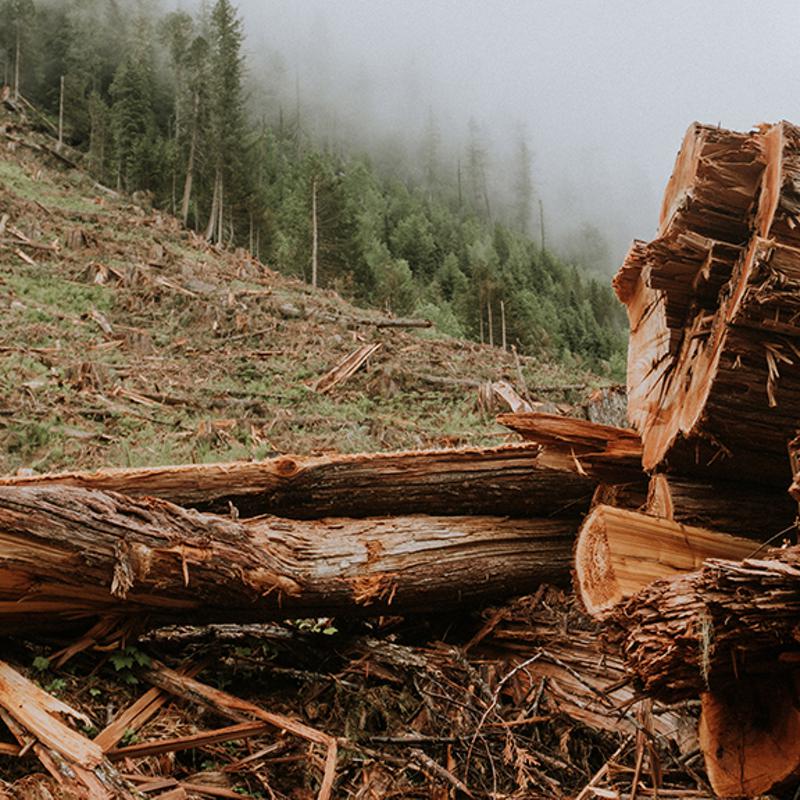
If a tree falls do you hear it? I sure do, at least twice a day … But I digress. There is something awe-inspiring about being surrounded by a bunch of huge trees. You can feel the strength and smell the history. Forests are not only connected creatures they are social and cooperative. When a forest is clear cut we see it and all creatures great and small are paying for it. Marbled murrelets, western screech owls, and spotted owls are all endangered, to name a few. The replanting seedling programs are an insult to forests and nature – skinny tree factories. “Look mum, skinny trees! Can I hug them?” “No Jonah, don’t touch, you’ll hurt them.” And most contentious of all, BC is allowing logging of old-growth forests (old, as in 250 years and older).
In BC you are either a tree hugger or a tree cutter. On Hornby, some think trees are dangerous; others think trees are friendly. But when it comes to old-growth forests, why are we still cutting down these noble, ancient giants? Many of the remaining old-growth forests in BC continue to be logged – even though the provincial government promised to “protect” them. Wade Davis wrote in The Wayfinders: “The key indicator, the canary in the coal mine if you will is language loss … every language is an old-growth forest of the mind, a watershed of thought, an ecosystem of spiritual possibilities.”
In 2019 the province appointed a team of professional foresters to hear perspectives on BC’s old-growth forest management practices. In the report, A New Future for Old Forests, they wrote “many of these ecosystems and old forests are simply non-renewable within any reasonable time frame.” Despite being called a renewable resource, it would take 500 to 750 years for an ancient coastal forest to grow back after logging.
During the 2020 election campaign, the BC NDP promised to protect “more of BC’s old-growth forests” by implementing all 14 recommendations in the report. Instead, over 31,000 hectares of forest recommended for deferral in 2021 was destroyed. Old-growth forests should be viewed as ecosystems, not just a source of timber.
In 2021, author’s of BC’s Old Growth Forest: A Last Stand for Biodiversity, mapped and recommended over two million hectares of at-risk old-growth forests to be deferred – a temporary status that would keep them from getting cut down until land use planning decisions took place. “It was intensely disappointing to see how badly they failed,” lead author and ecologist, Karen Price said. The report found that in four years, around 113,000 football fields worth of old-growth deferral zones were logged. In March authors of the report wrote to Eby that the proposed deferrals were meant to be an interim measure to reduce the risks of logging.
As we so often witness, government’s do not always see the forest for the trees. BC’s own logging agency continued to approve logging in old-growth forest zones that a government report flagged for protection. As Price noted, “Purposely causing extinction is not just a moral failure but also a high economic, ecological and social risk.”
The Special Tree Protection Regulation was also meant to sound good to the public while continuing to protect the interests of the logging industry. Trees above a certain size are protected from logging. But when two women from the Discovery Islands measured trees near their homes, they found “none of the few remaining giants, nor any of the first growth stumps, were big enough to qualify for provincial protection.” Even in Cathedral Grove only three of the iconic trees would meet the province’s threshold. If the grove wasn’t in a park, almost all of it could be logged, despite the regulation.
Last year, Premier David Eby told his forestry minister to raise BC logging levels 50% over the previous year. Grand Chief Stewart Phillip, president of the Union of BC Indian Chiefs, cautioned: “As the climate crisis deepens, allowing these irreplaceable forests to be logged is reckless and short-sighted.”
A report commissioned by Sierra Club BC last year showed BC forests were four times more likely to be logged inside the recommended deferral zones than outside. The report warned ominously that the “century-long feast on big old trees is approaching its end.” How many will be left?
Old-growth advocate Joshua Wright said he appreciates the regulations to save some of BC’s biggest trees, but it amounts to “green-washing” by the BC government as it continues to approve the logging of ancient forests while pledging to protect them. “I think the issue isn’t why are trees like this being cut down, it’s why are places like this being destroyed? That’s the bigger question.”