The Canada Investment Garage Sale By Keith Porteous (editorial)
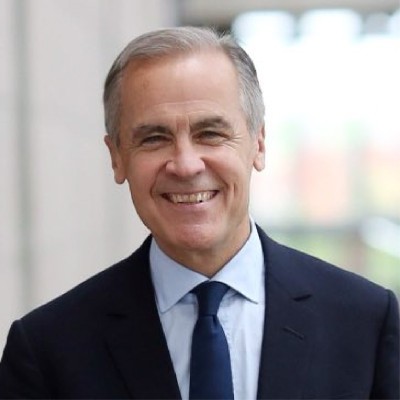
Prime Minister Mark Carney is throwing a party for the people who already own the house. He calls it the Canada Investment Summit. The government calls it nation-building, while investors will presumably call it an opportunity. Working people will be encouraged to call it independence, but it’s not independence, it’s customer service.
The summit is scheduled for September 14–15 in Toronto, where the federal government plans to gather the world’s biggest investors and pitch Canada as a destination for $1 trillion in new investment over five years. The guest list includes American billionaires, global CEOs, institutional investors and the financial giants who have never encountered a public asset they couldn’t imagine turning into a revenue stream.
Apparently, the best way to make Canada more independent is to invite the people with the deepest pockets to decide what the land and resources are for. Carney insists this is about independence, and that is a particularly exquisite joke. We are told Canada must become stronger and more independent in an unstable world, so Ottawa is shopping the country around to foreign investors.
Fossil fuels, critical minerals, ports, infrastructure, data, technology and defence is what the government proudly boasts that it is catalyzing for a trillion dollars of investment, while offering investors the most tax-friendly environment in the G7. Nothing says economic independence quite like putting the national economy on the showroom floor and inviting multinational corporations to make an offer.
And this is where Carney’s particular brand of political theatre becomes almost perfect. The former broker and central banker speaks the language of national resilience, strategic autonomy, and economic strength. But beneath the hyperbole and rhetoric lies an older, simpler creed, where capital must be made to feel comfortable. Canada must be “competitive.” Translation: make sure investors like the regulatory climate.
“We must build at scale and speed.” Translation: get projects approved and financed before anyone asks too many inconvenient questions. We must become an “energy superpower.” Translation: there will be plenty of room at the table for fossil-fuel capital. We must build a “defence industrial base.” Translation: the military-industrial complex has discovered a new market with a maple leaf on it.
It is remarkable how often the magic of trickle-down economics returns wearing a hard hat. The government says the summit will direct investment toward “clean energy”, critical minerals, new technology and AI, but the broader investment drive encompasses oil and gas, shipping and transportation, data and defence.
The “green” future and the war economy arrive together, hand in hand, like two corporate executives sharing a limousine. We are told that independence requires military spending, pipelines, ports, mines, and gas. Apparently, the final ingredient is reassuring investors that the government is prepared to absorb all the risk. What could possibly be more independent than socializing the risk and privatizing the profit?
Money does not arrive virtuously, it arrives looking for a return, and where investors are very good at finding one. Who will own what they build, who will profit from it, and who will pay when it fails? Those questions are considerably less glamorous at a Toronto ballroom full of billionaires.
Carney’s answer to foreign dependence is to deepen Canada’s integration with global pools of private capital. The problem is about the political power lost when governments become desperate to attract capital, and capital acquires even more leverage.
A climate policy that simultaneously treats Canada as an “energy superpower” and accelerates massive resource development cannot simply be baptized “green” because the press release contains the words “clean energy.” The climate does not care who writes the cheques.
Do the raw resources belong to a public with control over their future, or is this land destined to become one enormous investment opportunity with a national anthem, where the State will provide the infrastructure, absorb the risks, accelerate approvals, cultivate the investors, and subsidize industrial exploitation? Private capital will always arrive to collect the upside.
Call it what you like, but the rest of us will call it a garage sale with a flag on the door.