




What Healthy Herring Mean for Vancouver Island’s Economy
By Luke Barber, MBA
If you live on the islands or the mainland coast of British Columbia, you’ve likely heard discussions about herring — the roe fishery, the spawn, the predators that follow. But when we talk about herring, it’s worth asking a simple economic question:
What role do herring play in our coastal economy — and how does that compare to the industries that depend on a healthy marine ecosystem?
Recent estimates place the total annual value of the BC commercial herring industry in the range of $30–40 million. In some recent seasons, roughly $4 million of that has been landed value paid directly to fish harvesters in the Strait of Georgia. The remainder of the fishery’s value is realized later in the supply chain — processing, export, and roe markets, much of which goes overseas.
When we widen the lens, however, the scale shifts.
Whale watching and marine wildlife viewing in British Columbia generate over $200 million annually in direct economic activity. Recreational fishing contributes more than $1 billion annually in total economic activity across the province — supporting guides, lodges, marinas, fuel docks, mechanics, hospitality, and accommodation providers.
According to Fisheries and Oceans Canada’s 2023 tidal fisheries economic analysis, 85% of fishing days and 71% of expenditures occurred in the Strait of Georgia, Barkley Sound, Johnstone Strait, and the West Coast of Vancouver Island. These are the very waters where herring spawn and where much of Vancouver Island’s marine recreation and tourism economy operates.
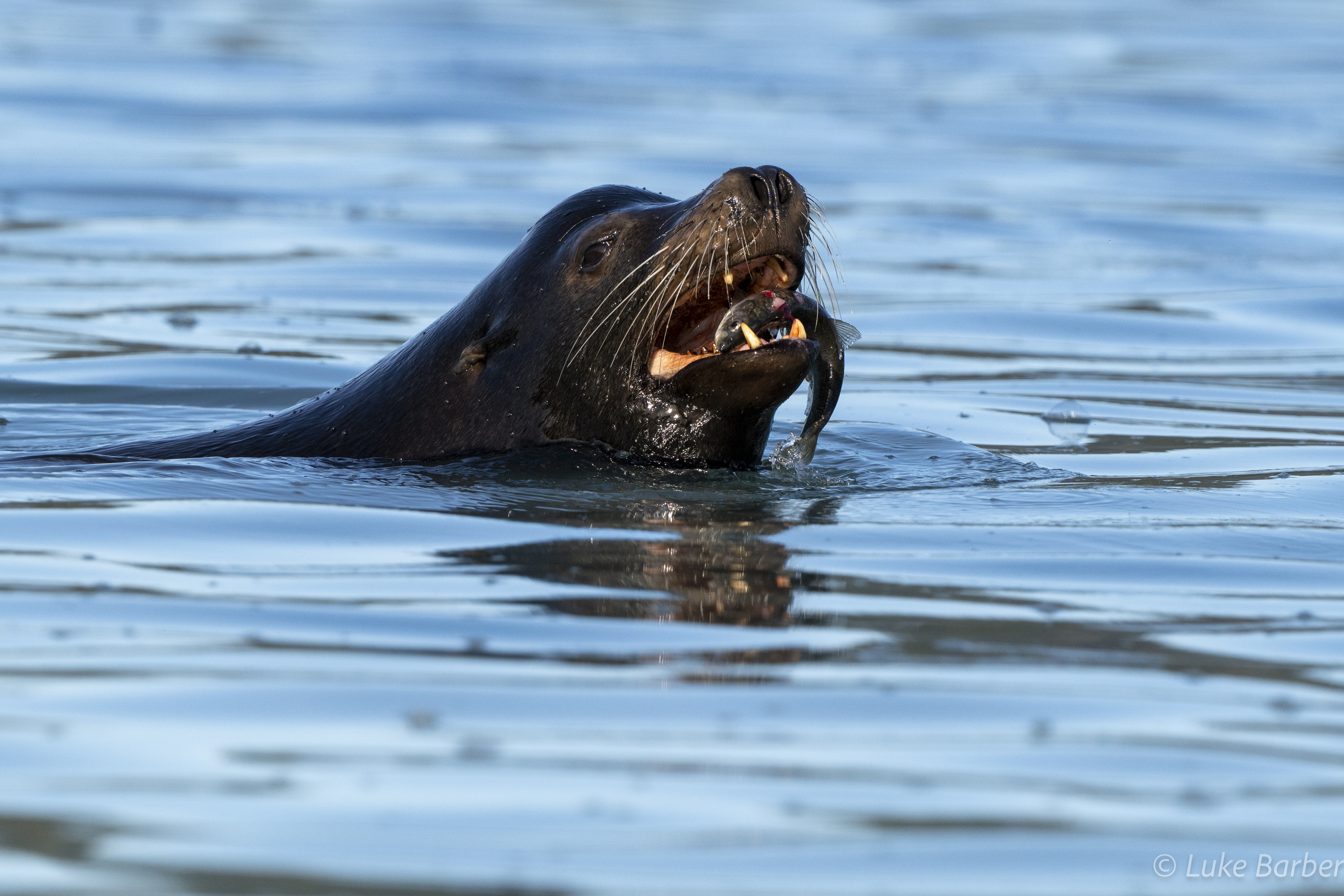
Pacific herring are a foundational forage species. When they spawn along our shoreline in early spring, they feed Chinook salmon, seabirds, humpback whales, sea lions, and Southern Resident killer whales. They link ocean productivity to every level of the marine food web. Their abundance influences predator presence, wildlife viewing opportunities, and the stability of fisheries that depend on salmon and other species.
Herring populations are naturally variable — they rise and fall with ocean conditions, plankton availability, and climate influences. But natural variability becomes more complex when harvest pressure coincides with spawning aggregations. Removing biomass at peak concentration can influence not only the present year’s catch, but the resilience of future year classes.
So the economic question becomes one of scale and structure:
How does a $30–40 million extractive fishery fit within a coastal economy where ocean-based tourism and recreation generate hundreds of millions — even billions — in activity each year, much of it concentrated in the same regions?
This isn’t about fishers versus tourism operators. It’s about thoughtful economic alignment. Extraction generates value at the point of harvest. A stable forage base generates renewable value — year after year — across multiple sectors.
Healthy herring don’t just support whales.
They support economies.


Photos: Hornby & Denman Islands — 2024 & 2025
Visit lukeb_photography on Instagram for more visual documentation of the spawn and the wildlife it sustains.


